


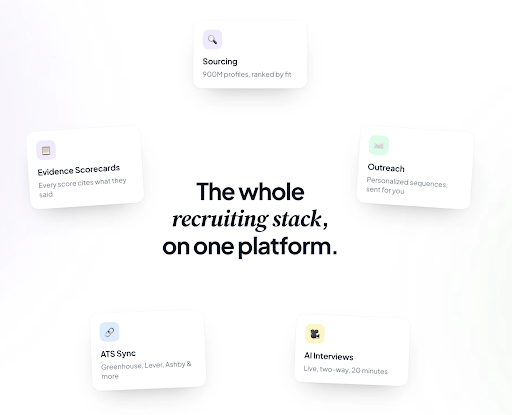
Running a successful staffing agency requires far more than a large folder of resumes and a good phone voice. Clients expect quick turnarounds on hard-to-fill roles, while candidates expect instant communication, smooth application processes, and rapid feedback. When team members spend half their working day on manual data entry, copy-pasting candidate details, and sending individual follow-up emails, growth quickly hits a wall.
To stay ahead of client expectations and outpace competing agencies, business leaders must invest in dedicated technology. Choosing the right recruiting software for staffing firms is one of the most consequential decisions an executive can make. The right software turns raw candidate databases into active talent pipelines, lowers time-to-hire metrics, and frees recruiters to focus on what they do best: building real human connections. This article covers the core features a placement operation needs, how sourcing decides who wins the fee, candidate management, workflow automation, and the factors to weigh before buying.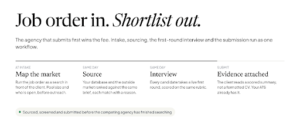
Core Features Necessary for Modern Placement Operations
At the center of any successful staffing agency technology setup sits a robust platform capable of tracking talent from initial outreach to final placement. Whether a vendor calls it recruiting software for staffing firms, recruiting agency software or staffing industry software, the job is the same. A high-performing staffing agency applicant tracking system serves as the operational hub of daily work. It keeps resume files organized, tracks application stages, and maintains clear records of candidate notes and contact records. Without a structured platform, candidates fall through the cracks, leading to missed opportunities and wasted sourcing budgets. Bullhorn, JobAdder and Vincere are the ATS software names most agencies will recognise, and any staffing recruitment software added around them should write back into the system of record rather than replace it.
However, staffing operations differ significantly from internal corporate human resource departments. While internal recruiters focus purely on filling open positions within a single organization, staffing agencies operate a dual-sided business model. They must manage active candidate pools while simultaneously nurturing relationships with prospective and existing client companies.
This dual requirement makes a specialized recruitment CRM for staffing agencies a valuable asset. A dedicated staffing CRM allows business development teams to track open job orders, map key decision-makers at target companies, and manage client sales pipelines right alongside talent pipelines. When candidate data and client relationship history live within the same software ecosystem, recruiters match candidate profiles to open job orders with speed and accuracy. Recruitment CRM systems are sold standalone, as recruitment CRM software with its own database, and as a module inside broader recruitment agency software; a recruitment agency CRM bought separately must sync with the ATS both ways, or the desk keeps two records; either way, the recruiting CRM is the record, and the sourcing, screening and outreach layers around it are where a desk’s speed is actually won.
Sourcing Candidates Faster With Smart Tools
Labor markets shift constantly, and qualified talent rarely stays available for long. When a client sends an urgent job order for a specialized role, the agency that submits top profiles first often wins the placement fee. Relying entirely on manual searches across external job boards or endless scrolling through static spreadsheets puts team members at a distinct disadvantage.
Modern recruiting software for staffing firms solves this bottleneck by integrating automated sourcing tools for recruiters. These tools search multi-channel databases, industry networks, and internal candidate records simultaneously to present a shortlisted selection of matching talent. Instead of spending hours reading through hundreds of resumes, recruiters receive immediate suggestions based on skill sets, location preferences, certifications, and current availability.
The difference between generations of candidate sourcing tools, and of recruiter tools generally, is easy to test on a live job order. Give the tool the order in one sentence, for example account executive, mid-market SaaS, has sold into hospitals, Chicago, and watch what it does. A first-generation tool matches the words. Current AI sourcing tools convert that sentence into criteria on the candidate and on their current employer, enforce only the deal-breakers, widen the search on their own when the result is thin and report what they widened, and return each person with a written justification: what is proven, what is absent, and what the data cannot settle. For an agency there is a second use of the same search, and it is what a headhunting firm has always sold at retained prices. Run it at intake, in front of the client, and the pool size, the titles people actually hold and who is open to a move become market intelligence the client will pay for, before a single candidate is contacted.
Advanced resume parsing technology reads incoming applications and extracts structured data, populating skills, work history, and contact details directly into profile records. This automatic data extraction saves hours of administrative work, giving team members time to interview candidates, prepare applicants for client meetings, and close deals. A resume parser working alongside the sourcing engine means the internal candidate database and the external search are ranked against the same brief, so the best candidate an agency already knows is never outranked by a stranger.
Building Long Term Relationships Through Strong Candidate Management
Finding strong resumes is only half the battle; maintaining active engagement with job seekers across their career lifespan creates true business value. A comprehensive staffing agency candidate management system, whether it lives in the ATS, in recruiting CRM software or in the recruiting software for staffing firms that wraps both, provides the operational framework needed to maintain consistent, personalized communication with thousands of job seekers.
Candidates frequently express frustration with agencies that break off contact after a single interview or contract assignment. An effective management platform fixes this issue through automated engagement campaigns. Recruiters set up systematic check-ins, such as automated messages before an assignment starts, reminders for updated certifications, or routine check-ins every few months.
Communication flexibility is another key component. Traditional email outreach often sees declining response rates, particularly for temporary staffing, industrial, or healthcare placements. Leading software platforms incorporate direct SMS messaging, flexible messaging channels, and self-service candidate portals. These portals allow workers to submit timecards, view work schedules, upload compliance documents, and update their availability right from their smartphones, improving both worker satisfaction and agency response times. For sourced candidates, the outreach itself should be drafted from the job order and the person’s profile, sent across email, SMS and voice in the consultant’s name, and stopped the moment the person replies, with replies triaged interested-first so nobody on the desk digs through a pile.
Improving Efficiency With Staffing Workflow Automation
Operational slowdowns usually do not happen because recruiters lack motivation. They happen because repetitive administrative duties consume a huge portion of the workday. From sending job description files and setting calendar invites to gathering compliance forms and checking reference details, administrative tasks slow down even the most effective recruiters.
Implementing a comprehensive staffing workflow automation platform removes these frictional barriers. Automated workflows execute specific actions based on candidate status changes. For instance, when a candidate moves to an interview stage, the system automatically generates confirmation emails, sends calendar invites to both candidate and client, and delivers automated SMS reminders prior to the scheduled meeting time.
Similarly, onboarding workflows request background checks, drug screenings, and tax documents as soon as a placement offer is accepted.
The stage most staffing firm software still leaves to the consultant is the first-round screen, and it is the one that caps how many roles a desk can work. Newer platforms run it: a live, two-way AI interview that asks about the claims on the resume, follows up on each answer, and scores against a fixed rubric, so every candidate submitted to a client has been interviewed on the same criteria and arrives with an evidence-scored summary the client can read in minutes. The consultant interviews the shortlist, not the pool.
I run The Cognitive, and that is the workflow we built for agencies: the job order searched across ~900M profiles, contact details verified before the consultant calls, outreach that halts on reply, and a live AI first round whose evidence-scored summary goes to the client and back to the ATS. Take that as one vendor’s answer to what recruiting software for staffing firms should now include, and weigh us against the factors below exactly as you would anyone else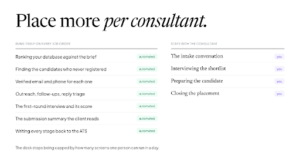 .
.
Place more per consultant: the desk work that runs itself, from ranking the pool to the first-round interview, against the work only a consultant can do.
Key Factors to Consider Before Buying
With many software options available on the market, selecting the right recruiting software for staffing firms requires careful evaluation of your specific business model. Temporary staffing, executive placement, and contract-to-hire firms each require distinct software functions; temp agency software built for shift fill and compliance is a different product from recruitment agency software built for permanent placement and search. Consider these key factors before selecting a vendor:
User Experience and Team Adoption
Software only delivers value if your staff uses it consistently. Overly complex systems with confusing navigation lead to low adoption rates, incomplete data entry, and frustrated recruiters. Choose platforms with clean, simple user interfaces that require minimal training time. The quickest test is to have one consultant run one live job order through a trial account, from intake to submission, without a guided demo.
Integration Capability
Your software must connect smoothly with existing business tools. Look for direct integrations or standard open API features that work with your payroll software, accounting platforms, background check services, job boards, and email systems. Ask for the ATS and recruiting CRM integrations by product name, and confirm they are two-way.
Analytics and Reporting
Data-driven decision making separates high-growth agencies from stagnant firms. Choose software that provides clear visual dashboards tracking key operational metrics like time-to-fill, recruiter outreach counts, candidate drop-off points, gross margin per placement, and client acquisition costs. Add one more: submissions per consultant per week, because it is the number the rest of the desk’s economics follow.
Scalability and Compliance
As your staffing agency expands into new branches or industry sectors, your technology must scale with you. Verify that the vendor maintains strict compliance standards regarding data privacy rules, job board posting standards, and regional employment laws.
Moving Your Staffing Agency Forward
Investing in purpose-built recruiting software for staffing firms is a mandatory step for agency owners who plan to scale operations. By adopting technology that unites candidate sourcing, client sales management, automated workflows, and structured tracking systems, staffing firms shorten placement cycles and build stronger client loyalty.
The right software choice removes administrative drag and empowers your recruiters to focus on building strong talent networks. Evaluate your existing software setup, identify where daily friction occurs in your pipeline, and upgrade your agency with tools built specifically for operational growth.
Recruiting Software for Staffing Firms FAQ
What is recruiting software for staffing firms?
Recruiting software for staffing firms is the set of tools an agency runs to take a job order from intake to placement: an applicant tracking system as the record, a recruitment CRM for client and candidate relationships, sourcing tools for recruiters, outreach and engagement automation, screening, and reporting on the desk’s economics. Newer platforms add AI sourcing from the job order and a live first-round interview.
What is the difference between a staffing ATS and a recruitment CRM?
The ATS tracks candidates through the stages of a job order. The recruitment CRM tracks relationships on both sides of the business: clients, decision-makers and job orders on one side, candidates and their availability on the other. Most agencies run both, often as one product.
How do staffing agencies source candidates faster?
By searching from the job order itself rather than by keyword: a brief parsed into filters, must-haves as hard gates, the pool ranked with a reason for each match, and the agency’s own database ranked against the same brief. Running the search at intake also gives the client market intelligence before outreach starts.
Should an agency automate the first-round interview?
If the desk is capped by how many screens a consultant can do, yes. A live AI interview scored against a fixed rubric lets every submitted candidate arrive with an evidence-scored summary, and the consultant spends their interview time on the shortlist rather than the pool.
Sparsh Goyal founded The Cognitive to make hiring run on autopilot: an AI recruiting platform that sources from ~900M profiles, contacts candidates with verified details, and holds live two-way AI interviews so the shortlist arrives with evidence attached.
