


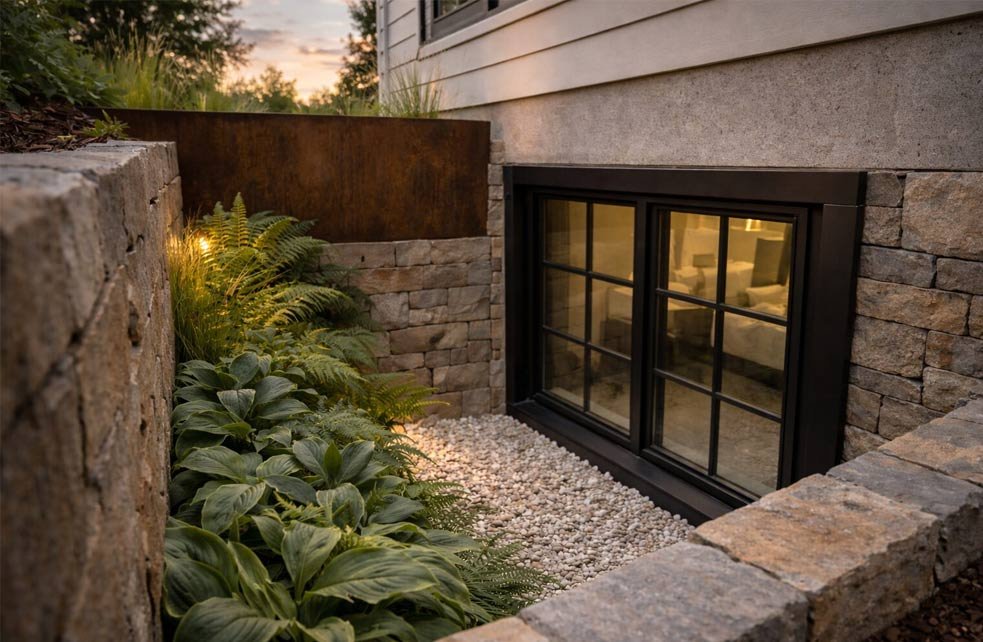
Basement spaces can add valuable square footage to a property, but they often have limited natural light and fewer convenient escape routes than rooms located above ground. When a basement is used for sleeping, working, relaxing, or other regular activities, safe emergency access becomes an important consideration. Egress windows can provide a practical solution by creating an emergency exit while also bringing fresh air and natural daylight into the lower level.
Installing an egress window is more involved than simply replacing a standard basement window. The project may require cutting a new opening into the foundation, excavating outside the wall, installing a window well, creating proper drainage, sealing the opening against moisture, and ensuring that the finished installation meets applicable building requirements. Careful planning is therefore essential for achieving a safe, durable, and weather-resistant result.
Understanding the Purpose of Egress Windows
An egress window is designed to provide an emergency escape and rescue opening from a room. In a basement, this can be especially important because occupants may otherwise have limited ways to leave the property if the main staircase becomes blocked.The window must provide sufficient clear opening space and be easy to operate when needed. A properly designed window well can also provide the necessary exterior space for a person to exit from below-grade areas.Requirements for window size, opening dimensions, well clearance, ladders, and other safety features can vary according to applicable building codes. Homeowners should verify the requirements that apply to their project before installation.
Why Basement Rooms Need Emergency Exits
A basement bedroom or regularly occupied living area should have an appropriate emergency escape route. In an emergency involving smoke, fire, or another hazard, relying only on a single staircase may create a dangerous situation if that route becomes inaccessible.An egress window provides another way out of the room. It can also provide access for emergency responders when the opening is properly designed and accessible from outside.For homeowners planning to convert an unfinished basement into a bedroom or living area, emergency escape requirements should be considered before construction begins. Adding the appropriate window during the planning stage can help avoid expensive changes later.
Bringing Natural Light Into the Basement
Basements often feel dark because surrounding soil limits access to daylight. A properly positioned egress window can significantly improve the amount of natural light entering the room.Natural light can make a basement feel larger, brighter, and more welcoming. This can be especially useful when the area is being converted into a home office, bedroom, family room, study, or recreational space.The amount of daylight depends on the window’s size, orientation, surrounding landscaping, and the depth of the window well. Professional planning can help homeowners select a location that balances safety, light, drainage, and structural requirements.
Improving Fresh Air and Ventilation
An operable egress window can provide an additional source of fresh air when weather conditions permit. This can make a basement feel less enclosed and may help reduce stale odors.Ventilation alone, however, should not be relied upon to solve excessive humidity or active moisture problems. If water is entering through the foundation, floor, or window well, the source should be corrected separately.A comfortable basement often requires a combination of moisture control, insulation, ventilation, and humidity management. The egress window can contribute to this environment while primarily serving its emergency escape function.
The Importance of Window Well Design
A below-grade window typically requires a window well to create enough exterior space around the opening. The well should provide adequate room for the window to open and for an occupant to exit safely.Window wells must also be designed with drainage in mind. Rainwater that collects inside the well can create a direct path into the basement if it cannot drain properly.A suitable drainage system can help move water away from the window opening. The surrounding soil and landscaping should also be arranged so that surface water does not flow directly into the well.
Window Well Drainage and Waterproofing
Moisture management is one of the most important aspects of an egress window project. Creating a new opening in a foundation introduces another potential pathway for water, so the surrounding area needs proper sealing and drainage.
The window frame, foundation opening, flashing, and window well should work together to reduce water intrusion. If the property already has foundation moisture problems, those concerns should be addressed before installing the new window.Downspouts should also be positioned so that roof runoff does not discharge into or beside the window well. Regularly clearing leaves and debris from the well can further support proper drainage.
Choosing an Appropriate Window Style
Several window styles may be suitable for basement egress applications, depending on the available space and applicable requirements. Casement, sliding, and other configurations can provide different benefits in terms of operation, ventilation, and opening size.Ease of operation is particularly important. In an emergency, occupants should be able to open the window without complicated procedures or specialized tools.Energy efficiency should also be considered. Quality glazing, suitable framing, weather-resistant construction, and proper installation can help reduce drafts and improve indoor comfort.The best window is not necessarily the largest or most expensive option. It should provide the required escape opening while fitting the foundation, room layout, drainage system, and overall design.
Foundation Cutting Requires Careful Planning
Installing a new basement window often involves cutting through a foundation wall. This should be treated as a structural project rather than a simple window replacement.Foundation walls carry loads and resist pressure from surrounding soil. Creating an opening without proper planning can affect structural performance and may lead to cracking or other problems.Professionals can evaluate the proposed location and consider existing structural components, plumbing, electrical lines, soil conditions, and foundation construction. Reinforcement may also be required depending on the opening and foundation design.Careful preparation helps ensure that the new window improves the basement without compromising the surrounding structure.
Egress Windows and Basement Bedrooms
Basement bedrooms require particular attention to emergency escape and rescue requirements. Since occupants may be sleeping during an emergency, the escape route should be accessible and easy to operate.
The window opening must provide adequate clearance, and the window well should offer enough room for an occupant to move safely outside. Depending on the design and applicable requirements, a ladder or other approved access feature may also be needed.Homeowners should verify all relevant requirements before converting a basement room into a bedroom. An egress window may be an important part of the project, but other safety and building requirements can also apply.
Protecting the Foundation Around the New Opening
Creating a new foundation opening should be accompanied by careful attention to the surrounding concrete. Existing cracks, settlement, moisture problems, or signs of movement should be evaluated before installation.The area should also be properly sealed after the window is installed. Waterproofing materials, flashing, drainage, and compatible sealants can help protect the foundation from water intrusion.If the foundation has existing structural concerns, those issues should be resolved before the opening is created. Combining a new window installation with unresolved foundation movement can increase the risk of future problems.
Energy Efficiency and Indoor Comfort
Basement windows can influence indoor temperature because they create an opening through a foundation wall. A high-quality, properly installed window can help reduce drafts and improve thermal performance.Insulated glazing and suitable framing can provide better resistance to outdoor temperature changes. Proper sealing around the frame is equally important because gaps can allow air and moisture to enter.Homeowners should also consider the relationship between the window and the rest of the basement’s insulation system. Properly coordinating the window with foundation insulation can help create a more comfortable finished space.
Common Problems With Poorly Installed Egress Windows
Improper installation can lead to several issues. Water intrusion is one of the most common concerns, particularly when the window well lacks adequate drainage or the foundation opening is not sealed correctly.Another problem is insufficient opening size. A window may look large but still fail to provide the required clear escape area. Hardware that is difficult to operate can also reduce its usefulness during an emergency.
Structural damage may occur when a foundation opening is created without proper engineering or reinforcement. These risks demonstrate why professional installation is often preferable to attempting a complex foundation modification without specialized experience.
Maintaining an Egress Window
Regular maintenance helps keep the window safe and functional. Homeowners should periodically test the opening to make sure it operates smoothly and inspect the frame, seals, glass, and hardware for damage.The window well should be kept free of leaves, dirt, branches, and other debris. A clogged well can prevent proper drainage and increase the risk of water entering the basement.If a window well cover is installed, it should not prevent emergency escape. The cover should be compatible with applicable safety requirements and should be easy to remove or open from inside.After heavy rainfall, homeowners should inspect the well for standing water. Persistent water accumulation may indicate a drainage problem that needs professional attention.
Planning an Egress Window Project
A successful installation begins with evaluating the basement’s intended use and the condition of the foundation. The proposed window location should be checked for structural limitations, utilities, drainage, exterior access, and available space for a window well.The project may involve excavation, foundation cutting, structural preparation, window installation, waterproofing, drainage work, and finishing around the opening. Planning these components together can reduce the likelihood of unexpected complications.Homeowners should also determine whether permits or inspections are required. Building requirements can vary, so verifying them before construction begins is important.
When Professional Installation Is Recommended
Professional installation is especially valuable when a new opening must be created in a foundation wall. The work involves structural considerations that go beyond normal window replacement.An experienced contractor can evaluate the foundation, identify potential obstacles, design the window well, address drainage, and install the window with appropriate sealing. This can help reduce the risk of leaks, structural problems, and safety issues.Professional assistance can also help homeowners understand which requirements apply to the project and whether additional improvements are necessary before the basement can be used as intended.
Long-Term Benefits of Egress Windows
A properly installed egress window can provide several benefits beyond emergency escape. It can increase natural light, provide fresh air, improve the appearance of a basement, and make the lower level more suitable for everyday use.For homeowners planning a basement renovation, an egress window can help transform an enclosed space into a brighter and more functional room. The improvement may also make the basement more appealing to future occupants.The long-term value depends heavily on installation quality. A window that leaks or creates drainage problems can become a liability, while a properly designed system can provide years of useful service.
Conclusion
Egress windows can play an important role in basement safety while also improving natural light, ventilation, and everyday functionality. They are especially valuable when a basement is being converted into a bedroom or another regularly occupied space.Because installation often requires modifying a foundation wall, excavating outside the building, constructing a window well, and establishing proper drainage, the project requires careful planning. Structural integrity, waterproofing, window operation, opening size, and applicable safety requirements should all be considered.With professional assessment and quality installation, an egress window can provide a dependable emergency exit while making a basement brighter, more comfortable, and more useful. Regular maintenance of the window, seals, well, and drainage system can help preserve its performance and protect the surrounding foundation for years to come.
