


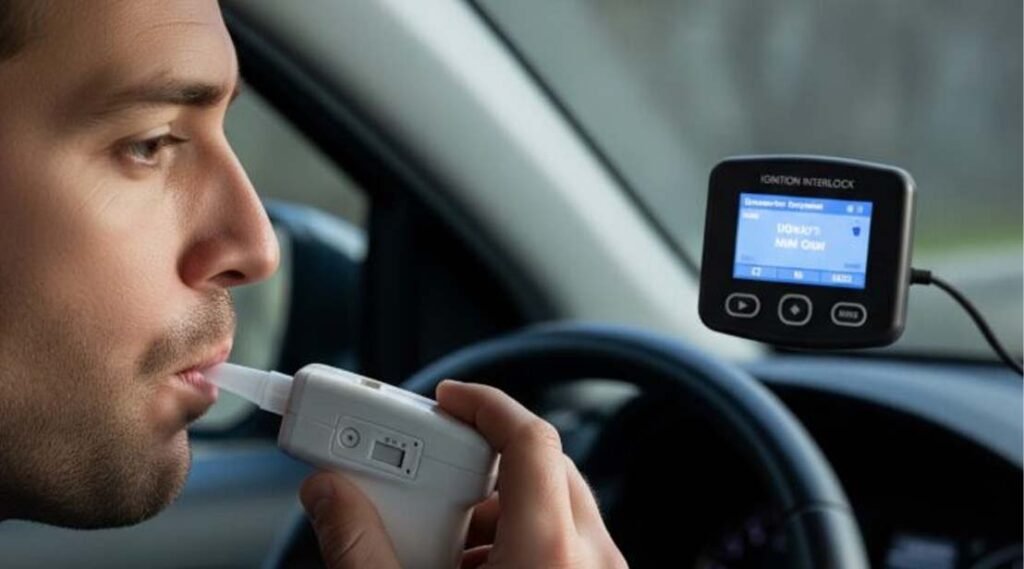
An effective ignition interlock program is only as good as the service network behind it. Although the interlock itself is just a sensor, everything that affects completion of a driver’s interlock program successfully happens at the service center, in the calibration bay, and in the data that is transmitted between and among the service center, the monitoring authority, and the client. So for service centers, and for people advising people who are required to install an interlock, the details of how a service center operates are far more important than the details of the interlock that service center is selling.
The technical work behind a compliant installation
The proper installation of an ignition interlock device is more than just connecting wires from the interlock device to the vehicle’s ignition, starter, and switched power sources. The proper installation of an interlock device also involves the proper installation of a relay that will interrupt the cranking of the vehicle’s engine to allow the driver of the vehicle to start the vehicle and then to drive it. Special wiring may be required for certain types of vehicles, for example, vehicles with push-button starters, vehicles with stop-start systems, and vehicles that are equipped with CAN bus architecture. A technician who does not have the proper training and experience in the installation of these types of devices could easily end up causing fault codes to be set, for example, or even worse, causing the vehicle to be left stranded due to problems that are not related to the driver’s ability to drive safely while under the influence of alcohol.
Details that cause callbacks later
Documentation of the vehicle at the time of the installation of the ignition interlock device is to be completed by the experienced technician. This includes documentation of the conditions of the vehicle as well as before and after photographs of the wiring harnesses. The technician also checks the battery to ensure that it is of sufficient capacity to support the interlock device.
The handover session
The most important thing that needs to be done with the driver at handover is to practice the breath test on them. They need to learn how to take a proper breath test, learn about the rolling retest, learn about the time frame in which you can take a test, and learn the difference between an abort reading and a fail reading. That is all the driver needs to know and then they will not go back to a violation that was not caused by alcohol.
The servicing cycle and what happens at each visit
A typical Interlock Program has the driver return to a Service Center with their Interlock device within a specific time frame (typically between 30 and 60 days) for a Calibration of the Interlock device against a known alcohol standard, check for the latest Firmware and to download the Interlock Device’s log of all events recorded.
| Visit type | Typical trigger | Work performed | Driver impact |
| Scheduled calibration | Fixed service interval | Wet or dry gas calibration, data download, visual inspection | Short appointment, service window extended |
| Early service | Violation code or tamper alert | Log review, hardware check, incident documentation | May be reportable to the monitoring authority |
| Lockout response | Missed service or accumulated violations | Reset after code authorization, diagnostic review | Vehicle immobile until attended |
| Removal | Program completion or authority approval | Harness removal, circuit restoration, final report | Requires written clearance before booking |
Why interval discipline is a service function
Centers that offer an appointment reminder, open late evening hours or on weekends, with all required hardware and calibration material, will prevent their clients from being locked out.
Interpreting the data and managing violations
The events recorded by the interlock device as part of normal operation of the interlock are detailed in a report provided by the program. The staff of a program would be able to describe the details of the events recorded by the interlock device in simple terms and explain how these events would be recorded by and viewed by the recording authority. However, this is a factual account of the actions of a device and is to be distinguished from legal advice. The driver should seek a separate source of advice for any legal questions or concerns that they may have.
Common reasons for unexpected readings on an interlock device
- Residual mouth alcohol from mouthwash, breath spray, or certain medications taken shortly before a test.
- Fermented or yeast-based foods consumed immediately before starting the vehicle.
- Incorrect blow technique, producing an abort rather than a valid sample.
- Rolling retest prompts missed because the driver could not safely respond in time.
- Power interruptions during jump-starting or battery replacement, which can register as a tamper event.
Documentation habits that protect everyone
A technician note written and attached to the service record for an anomaly is sufficient to explain any unusual readings to the reviewing body. A center that logs all electrical faults, all battery replacements, and all third-party repair work will have sufficient documentation to refute any claims by a driver that a particular event did not occur.
How to evaluate a provider
Not every shop is approved to install interlock devices. Even if they are, not all interlock service centers provide the same level of quality of service. Find out what approvals a given provider has and how much business they can do to service you in a timely manner. Also, find out how transparent they are.
- Confirm the device model is approved by the relevant provincial or state authority for the program the driver is entering.
- Ask how reporting is transmitted and how quickly, since delays create compliance exposure the driver cannot fix.
- Check the fee schedule in full, including installation, monthly monitoring, calibration, lockout resets, and removal.
- Establish after-hours support arrangements and the geographic reach of the network, which matters for anyone who travels.
- Review technician training and certification currency for the vehicle types in the client’s fleet or household.
Coverage density for service centers is an important factor to consider when assessing potential providers for ignition interlock devices. Before committing, it is worth comparing the authorized interlock service centres in Canada, since each one operates under the rules of the interlock program in its own province. The rules for the interlock programs differ between the provinces, for example, the interval between required service for the interlock, the types of violations that trigger various sanctions, and the requirements for removal of the interlock after the required period of time. A driver who is required to participate in an interlock program and who has relocated to a different province or who is required to commute to work in a different province would benefit from a network of service centers authorized to provide service for interlock programs in all provinces. In such cases, reinstallation of the interlock would not be required.
Where support makes the measurable difference
Better completion rates are achieved when all the administrative tasks of a program are transferred to the provider. This means that as long as the provider has set up an appointment in a proper manner, has been clear in the explanation of the log data of the device, can handle a lockout in a timely fashion and has reported all the data correctly to the monitoring authority and the client, then there is very little that can go wrong that would cause extended periods of time in a program.
