


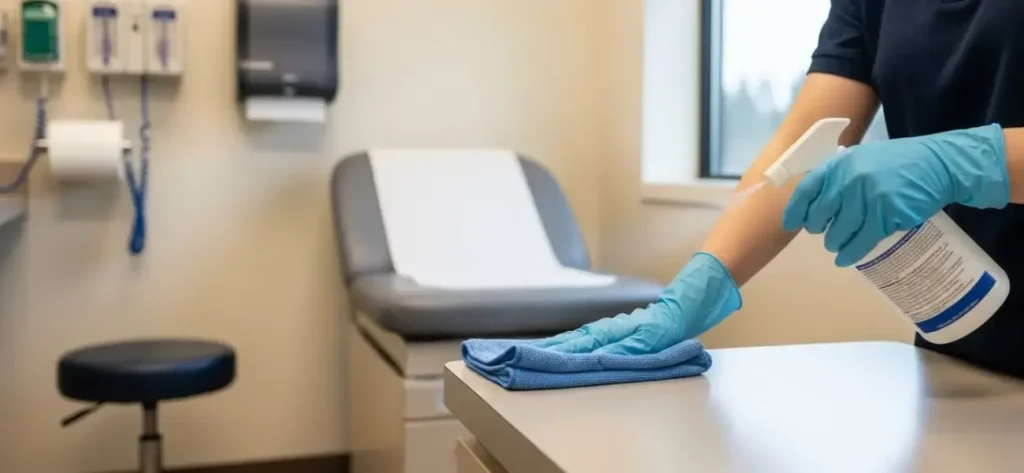
Many patients use exam rooms throughout the day, so surfaces, furniture, equipment, and touchpoints can quickly become contaminated between appointments. Even when a room looks tidy, frequent contact with door handles, examination tables, counters, chairs, switches, and shared devices creates ongoing hygiene demands. Medical cleaning for clinics helps support a cleaner environment by focusing on the areas that matter most between patient visits. Consistent cleaning also helps staff maintain a more orderly workflow, reduces unnecessary buildup, and supports a more reassuring environment for patients who expect healthcare spaces to feel clean, controlled, and carefully maintained throughout every appointment.
Where hygiene routines matter
- Why High-Touch Surfaces Need Attention Between Patients
Exam rooms contain many surfaces that are touched repeatedly during routine appointments. Door handles, light switches, examination tables, chair arms, drawer pulls, counters, and shared equipment can all be handled by patients and staff within a short period of time. That repeated contact makes these areas important parts of the cleaning process. Clinics reviewing the Australian Cleaning Care website may be looking for ways to strengthen hygiene routines around these frequently used spaces. Medical cleaning for clinics helps create a more structured approach, so high-touch areas are not overlooked simply because the room appears visually clean. This matters because surface hygiene depends on what people interact with, not only what looks dirty. A room can appear organised while still needing targeted cleaning before the next appointment begins. Consistent attention to these contact points supports a more controlled environment. It helps staff move from one patient to the next with greater confidence that the room has been prepared appropriately.
- How Medical Cleaning Supports Faster Room Turnover
Clinics often operate on tight appointment schedules, which means exam rooms need to be prepared efficiently without reducing cleaning quality. Medical cleaning for clinics supports that process by creating clear routines for what needs attention after each patient leaves. Instead of relying on rushed or inconsistent habits, staff can follow a structured cleaning approach that covers examination surfaces, shared tools, seating areas, counters, and other frequently touched parts of the room. This matters because faster turnover should not mean less thorough preparation. A well-organised routine can actually make the process more efficient by reducing uncertainty about what should be cleaned and in what order. When cleaning tasks are predictable, rooms can be reset more smoothly for the next appointment. That helps protect scheduling flow while also supporting hygiene standards. Patients benefit because they enter a space that feels ready for them, and staff benefit because they are not repeatedly improvising cleaning steps under time pressure between every visit.
- Why Medical Cleaning Helps Reduce Cross-Contact Between Appointments
One of the most important reasons medical cleaning matters is that exam rooms are shared environments. Different patients use the same surfaces throughout the day, and staff may move between several rooms during one shift. Without consistent cleaning between appointments, contact with shared surfaces can contribute to unnecessary cross-contact. Medical cleaning for clinics helps reduce that risk by focusing on areas that are most likely to be touched repeatedly. This includes not only the examination table but also counters, seating, handles, switches, and any equipment that stays in the room from one appointment to the next. The value of this approach is consistency. Cross-contact risk is easier to manage when cleaning is built into the normal rhythm of patient turnover rather than treated as something that happens only at the beginning or end of the day. That repeated attention supports a more hygienic environment across the full clinic schedule. It helps reinforce the idea that every patient should enter a room that has been properly prepared before their visit begins.
- How Cleaner Exam Rooms Support Patient Confidence
Patients often notice the condition of an exam room before they notice anything else about the visit. A clean table, organised counter, fresh surfaces, and uncluttered environment can help create a sense of order and care from the moment someone enters. Medical cleaning for clinics supports that impression by helping rooms stay consistently maintained throughout the day rather than looking fresh only during morning appointments. This matters because hygiene is part of the patient experience. People may already feel anxious about an examination or treatment, and entering a room that appears neglected can increase discomfort. A well-maintained space can create a more reassuring atmosphere and show that the clinic takes cleanliness seriously. This does not mean appearance alone is enough, but visible order supports the larger hygiene process. When exam rooms feel consistently prepared between appointments, patients are more likely to feel comfortable in the environment, which can make the overall visit feel more organised and professionally managed.
- Why Consistent Cleaning Helps Staff Maintain Better Workflows
Medical cleaning also supports clinic staff by creating a more dependable working environment. When exam rooms are cleaned consistently between appointments, staff know where equipment is located, which surfaces have been prepared, and what needs attention before the next patient arrives. That predictability reduces interruptions and makes it easier to keep appointments moving on schedule. A clean room can also make small issues easier to notice, such as spills, damaged materials, or supplies that need replacement. Medical cleaning for clinics therefore supports more than hygiene alone. It helps create an orderly workflow where staff are not constantly catching up on cleaning tasks that were missed earlier in the day. This matters in busy clinics because small delays can accumulate quickly. When room preparation is handled as part of a consistent routine, the clinic can maintain a steadier pace without sacrificing cleanliness. Better workflow and better hygiene often support each other because organised cleaning makes it easier to prepare every room predictably.
Why Better Cleaning Makes Every Appointment Start Stronger
Medical cleaning for clinics supports better hygiene in exam rooms between appointments by focusing on the spaces and surfaces that patients and staff use most often. Consistent cleaning helps reduce cross-contact, supports faster room turnover, strengthens workflow, and creates a more reassuring environment for every patient who enters. Exam rooms do not need to look visibly dirty before they require attention. Their frequent use makes regular preparation essential throughout the day. When cleaning becomes part of the normal appointment rhythm, clinics can maintain a more controlled and dependable environment. Better hygiene helps each visit begin in a room that feels clean, organised, and ready.
