


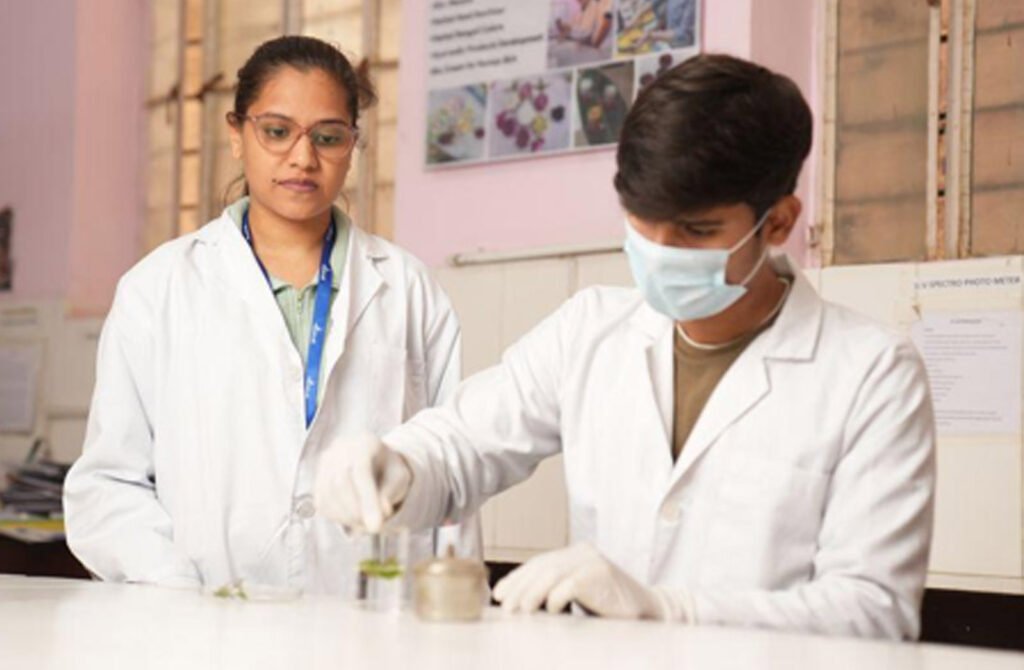
Biochemistry sits at a fascinating point between biology and chemistry. It looks closely at the processes that keep living things functioning, from the way cells produce energy to the way genes, proteins, hormones, and medications influence the body. That connection gives the subject relevance far beyond the classroom. For students interested in healthcare, laboratory science, biotechnology, research, or the mechanisms behind disease, biochemistry can provide a foundation that supports several possible futures rather than one narrowly defined career.
Biochemistry Explains What Happens Beneath the Surface
Biochemistry focuses on life at the molecular level.
Students explore proteins, enzymes, DNA, metabolism, cellular signaling, and the chemical reactions that allow organisms to function. At first, those topics can feel highly technical, but they answer surprisingly practical questions.
Why does a medication change the way a cell behaves? How does the body convert food into usable energy? What happens when an enzyme stops working correctly? Why can a small genetic change contribute to a serious disease?
Biochemistry provides ways to investigate those questions.
It also connects naturally with genetics, microbiology, physiology, pharmacology, and other life sciences. Instead of viewing each field as a separate subject, students begin to understand how chemical and biological processes interact.
That ability to connect systems is part of what gives the degree its versatility.
A Scientific Foundation Can Leave Several Doors Open
Students sometimes hesitate to choose a science degree because they worry it will lock them into one highly specialized occupation.
Biochemistry can work differently.
A BS in biochemistry can appeal to students who want substantial training in the life sciences while preserving room to explore several professional directions. Coursework can create a foundation for laboratory work, biotechnology, pharmaceutical science, healthcare-related study, research, quality roles, or further education.
The important point is that the degree should not be treated as a complete career plan by itself.
Two students can graduate from similar programs and move in very different directions depending on the research, internships, electives, technical abilities, and professional experiences they build along the way.
That flexibility is an advantage when it is used intentionally.
The Science Has a Direct Connection to Human Health
Modern medicine depends heavily on understanding processes that cannot be seen with the naked eye.
Disease can begin with altered proteins, disrupted signaling pathways, genetic changes, or abnormal chemical reactions inside cells. Researchers need to understand those mechanisms before they can develop better diagnostics, medications, or treatments.
The role of molecular biology and biochemistry in biomedical research shows how scientists use these disciplines to examine cellular machinery and understand biological processes connected with disease and treatment.
That connection makes biochemistry particularly interesting for students who want their scientific education to remain close to healthcare.
You may not work directly with patients, but the questions you study can still influence how diseases are understood, detected, and treated.
The Degree Builds More Than Laboratory Knowledge
Laboratory work is an important part of studying biochemistry, but the degree develops abilities that extend beyond handling samples or running experiments.
Students learn to work carefully with complicated information. Experiments require planning, accuracy, documentation, and the patience to investigate why a result did not match expectations.
Data analysis becomes important as well.
A scientific result means little until you can interpret it, compare it with existing evidence, and determine whether the conclusion is actually justified.
Writing and communication matter too. Scientists regularly have to explain methods, document findings, present results, and discuss their work with people from other specialties.
These habits—analytical thinking, precision, evidence-based reasoning, and clear communication—can remain valuable even when someone’s eventual career moves away from a traditional laboratory.
Career Paths Depend on How Far You Want to Study
Biochemistry can lead to opportunities at different education levels, but expectations vary considerably by role.
Some bachelor’s-level graduates pursue laboratory support, research assistance, quality-control, technical, or related scientific positions. Others continue into graduate education because they want to conduct independent research or specialize in a more advanced area.
The broader outlook for biochemists and biophysicists also illustrates an important distinction: bachelor’s and master’s degree holders may qualify for some entry-level positions, while independent research and development roles commonly require doctoral preparation.
That is useful to understand before choosing the major.
Biochemistry can be the beginning of a scientific career, but some destinations require additional education. Knowing that early helps students plan rather than discovering the requirement after graduation.
Research Experience Can Change the Value of the Degree
Science becomes much clearer when you move beyond textbook examples.
Research experience can show students what scientific work actually feels like: preparing carefully, troubleshooting experiments, dealing with unexpected results, keeping accurate records, and slowly building evidence around a question.
It can also help clarify career preferences.
You may discover that laboratory research is exactly what you want. You might instead find that you enjoy analyzing results more than conducting experiments, or that you prefer communicating science, working with healthcare applications, or exploring another related field.
None of those discoveries represents wasted effort.
Practical experience helps turn a broad degree into a more specific professional direction.
Students who seek research opportunities, internships, or substantial laboratory projects also leave with something valuable to discuss during job or graduate-school interviews: evidence of how they have actually applied their scientific training.
Data Skills Are Becoming Part of Modern Biology
Biochemistry increasingly involves more than test tubes and microscopes.
Modern biological research can generate large datasets involving genes, proteins, molecular interactions, or experimental measurements. As a result, students who develop confidence with statistics, data analysis, and computational tools can strengthen their scientific preparation.
You do not necessarily need to become a programmer.
Even basic comfort with organizing data, recognizing patterns, evaluating results, and using appropriate analytical software can make laboratory and research work easier.
This becomes particularly valuable when biochemistry overlaps with genomics, biotechnology, drug discovery, and other fields where biological information is increasingly analyzed at scale.
Combining scientific understanding with quantitative confidence can therefore make the degree more adaptable.
Choosing the Right Program Requires Looking Beyond the Major Name
Two programs called biochemistry may provide noticeably different experiences.
One may emphasize laboratory research. Another may offer greater flexibility for students interested in healthcare preparation or related sciences. Course requirements, laboratory access, research opportunities, electives, and faculty support can all influence what students get from the degree.
Look beyond the program title.
Consider how much hands-on laboratory work students complete, whether research opportunities are accessible to undergraduates, and whether the curriculum lets you explore areas related to your interests.
It is also worth examining how well the program supports the next step you are considering, whether that is employment, graduate research, or professional education.
A strong program should help you connect scientific concepts with practical experience.
Make the Degree More Valuable Before Graduation
The most useful career preparation often happens alongside coursework.
Build relationships with instructors. Look for research experience. Explore internships. Keep track of laboratory techniques, analytical tools, and scientific software you learn to use.
Communication skills deserve attention as well.
Being able to explain a complex experiment clearly can matter almost as much as conducting it correctly. Presentations, technical writing, and collaborative projects help develop that ability.
Most importantly, begin exploring careers before your final year.
Biochemistry is broad enough that waiting until graduation to consider what comes next can make the transition unnecessarily difficult.
Build Your Future Around the Questions That Interest You
Biochemistry is demanding because it asks students to understand life in remarkable detail. That challenge is also what makes the subject useful.
It provides a way to explore the mechanisms behind health, disease, genetics, metabolism, and treatment while building scientific skills that can support several professional directions.
The degree works best for students who are curious about why biological systems behave the way they do and willing to develop both technical knowledge and practical experience.
You do not need to know your exact future before you begin.
What matters is using the degree to keep discovering which scientific questions, working environments, and career possibilities hold your attention. With that approach, biochemistry becomes more than a collection of difficult courses. It becomes a foundation for deciding where your interest in science can take you next.
