


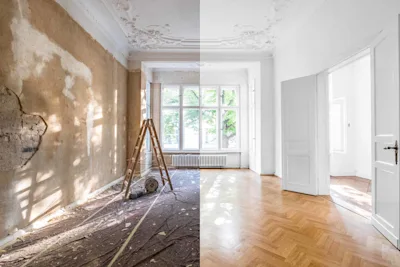
A leaking shower can start as a straightforward repair and end with a folder full of tiles, taps and storage ideas. Once a room needs attention, replacing everything can feel more sensible than paying someone to return later. Yet the larger project may solve several problems the household did not actually need to fund this month.
The useful distinction is between restoring a safe, working home and improving how it looks or feels. Both can matter, but they need different deadlines and different spending decisions. A clear repair plan makes room for future improvements without allowing them to crowd out the immediate job.
Describe the problem before choosing the result
Write one sentence explaining what has failed and how it affects daily life. Water escapes when the shower runs. A window will not close properly. A kitchen extractor has stopped working. Those descriptions give a tradesperson something to investigate; “we need a better bathroom” describes a much wider project.
Ask what needs checking before anyone can confirm a solution. The visible symptom may not identify the cause, and covering damage with a new finish can leave the original issue unresolved. Obtain competent advice where safety, water ingress or structural concerns are involved. A budgeting exercise should never become a reason to delay making a dangerous situation safe.
Put every proposed task into one of three groups
Divide the plan into essential repairs, associated work and optional upgrades. Essential repairs address the fault. Associated work covers the practical consequences of doing that repair, such as access or making good an affected surface. Optional upgrades change the specification beyond what is needed to restore normal use.
This approach does not mean choosing the cheapest material regardless of suitability. A durable replacement may be sensible. The question is whether each extra purchase is necessary for the agreed repair or simply attractive while the room is already being discussed.
| Category | Example | Budget decision |
|---|---|---|
| Essential repair | Find and fix the source of a shower leak | Confirm the diagnosis and safe scope first |
| Associated work | Restore a surface disturbed during access | Ask whether it is included in the quote |
| Optional upgrade | Replace a working basin to match new fittings | Price separately and consider a later phase |
Compare quotes for the same job
A lower total is difficult to judge if one contractor includes disposal, access and finishing work while another has priced only the repair itself. Give each contractor the same written description and ask them to identify assumptions and exclusions. Keep optional improvements on separate lines rather than folding them into a single package.
For homeowners in England, Citizens Advice’s guidance on arranging home improvements covers finding traders, comparing quotes and agreeing a written contract. Use the guidance for the relevant UK nation, and check permissions, qualifications and insurance where appropriate. Do not treat a brief verbal estimate as a complete project agreement.
Keep design inspiration in a separate list
There is nothing wrong with collecting ideas while a repair is being planned. The Intelligence Magazine’s guide to transforming a small Edinburgh bathroom offers inspiration for a more extensive redesign. Keep those ideas in a future-project list so they do not quietly become conditions of completing today’s repair.
Before adding an upgrade, ask two questions: would we buy this if the fault had not occurred, and can it be done later without undoing the repair? If an improvement genuinely needs doing at the same time, ask the contractor to explain why and show its additional cost. That makes the trade-off visible.
Check the household budget before choosing how to pay
Confirm what is available after essential household commitments, rather than treating the bank balance as a repair allowance. Check whether a warranty, existing cover or another responsible party may apply before assuming the household must meet every cost. Keep a reserve for uncertainties identified during the inspection instead of spending the entire allowance on finishes.
For UK readers comparing bad credit loans for an unavoidable repair, the relevant questions are affordability, eligibility, fees and the total amount repayable. Approval is not guaranteed, and a smaller monthly payment can still involve a substantial overall cost. Compare alternatives before applying and avoid adding borrowing for optional upgrades simply because a contractor is already on site.
If existing repayments or essential bills are already difficult to manage, seek free debt guidance before taking on another commitment. A repair plan needs to work alongside the household’s ongoing finances, not just produce enough money for an initial deposit.
Treat running costs as a separate calculation
Some modest improvements may help comfort or running costs, but that does not make every energy-saving claim a reason to expand the project. Ask what the improvement costs, what problem it addresses and whether the expected benefit depends on the condition of the home or the way it is used.
The Energy Saving Trust’s draught-proofing guidance distinguishes unwanted gaps from necessary ventilation. Small measures can be considered separately from a larger renovation, while vents and other required airflow must remain effective. Choose work that suits the property rather than copying a general checklist without checking its purpose.
Agree the stopping point before work begins
Set out the repair, associated work, payment stages and completion standard in writing. Agree how extra work will be quoted and authorised if something unexpected is uncovered. Keep photographs, messages and receipts together so the household can see what changed and why.
Include the practical cost of disruption in the plan. If a room will be unusable, ask how long that is expected to last and what preparation is needed. Moving furniture, protecting belongings or arranging access can affect the household even when those tasks do not appear as separate invoice items. A realistic timetable helps prevent a rushed purchase made only because the work has become inconvenient.
Once the essential work is complete, review the optional list with the pressure removed. You can find practical ways to review everyday household bills, then decide whether any savings should go towards a later improvement. A successful repair restores the home’s function and leaves the household able to manage the month that follows.
