


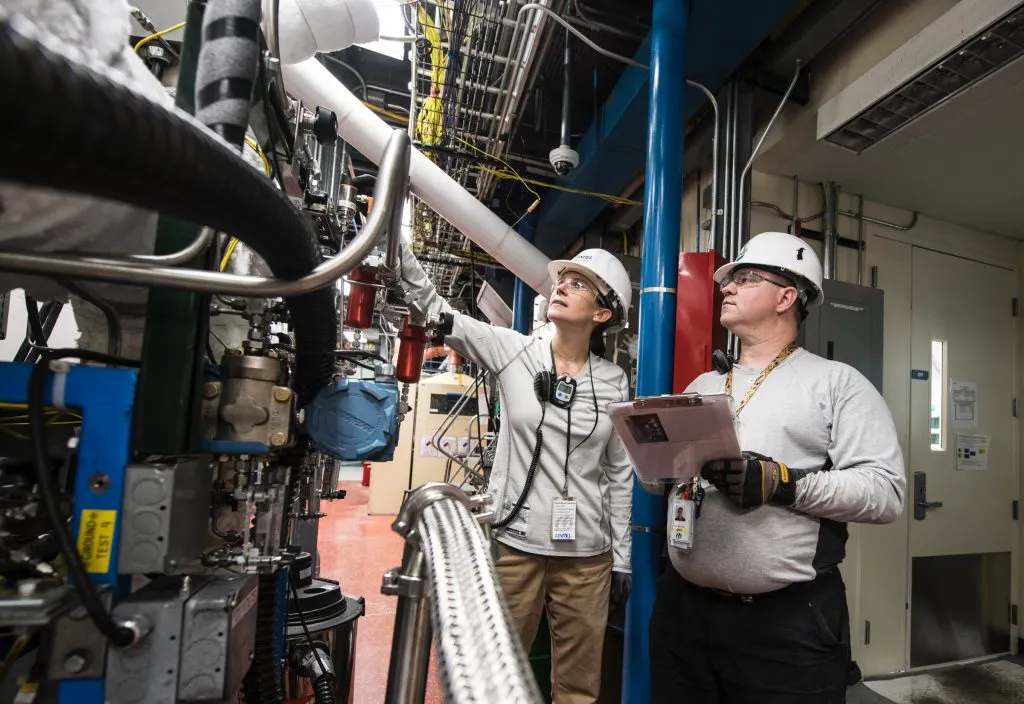
For any organisation or business that relies on machinery, a constant priority is ensuring such equipment stays available and operational.
The use of the right lubrication products from RS can be a key part of an effective preventative maintenance programme. This is because of the role that such oils, greases, and other lubricants can play in reducing friction, wear, and other issues that may contribute to machinery failure.
After all, if equipment is allowed to fail, this can be expensive in more ways than one. A motor malfunctioning, a bearing wearing out, or a conveyor component sustaining damage can interrupt production, delay orders, and force engineers to spend valuable time diagnosing and repairing faults.
It’s also true that not every breakdown can be prevented. However, by implementing a structured preventative maintenance strategy, an organisation can put itself in a strong position to identify potential problems before they develop into disruptive failures.
An Introduction to Preventative Maintenance
Preventative maintenance, often referred to as “preventive maintenance”, “planned preventive maintenance”, or simply “PPM”, is planned maintenance carried out to help minimise the likelihood of equipment failure.
Instead of waiting for a machine to break down before intervening, PPM entails maintenance teams moving proactively before equipment has the chance to reach this stage.
This can be accomplished by scheduling inspections, servicing, cleaning, lubrication, adjustments, and component replacement, based on such factors as manufacturer recommendations, operating conditions, and how the given equipment is used.
It is an approach that can be applied to almost any type of industrial machinery, encompassing the likes of:
- Motors and drives
- Pumps and compressors
- Conveyor systems
- Bearings and gearboxes
- Production machinery
- Hydraulic and pneumatic equipment
- Fans and ventilation systems
- Material-handling equipment
Unlike reactive “fix-it-when-it-breaks” strategies, preventative maintenance is geared towards keeping assets in optimal condition throughout their working life.
Measuring The Impact of Preventative Maintenance
Research and industry experience have consistently shown that where a merely reactive maintenance approach is pursued, this accounts for a large share of maintenance budgets.
Crucially, reactive maintenance tends to drive much higher costs through emergency callouts, overtime, rushed parts, and lost production.
By contrast, the in-advance planning of maintenance work can allow for it to be much more predictable in its forms and impacts. Such processes can be scheduled during quieter times or shift changeovers, and they typically cost less overall.
Facilities that adopt robust preventative maintenance regimes commonly report hefty reductions in unplanned downtime, potentially by around 30% to 50%. Furthermore, such organisations tend to incur lower emergency repair spend and can be well-placed to achieve improved overall equipment effectiveness (OEE).
How Does Preventative Maintenance Translate to Decreased Downtime?
Unplanned stoppages can cascade rapidly. A seized bearing or dry chain, for instance, doesn’t “just” potentially halt a production line; it can also effectively delay deliveries, leave staff idle, and compromise downstream processes.
There are various ways in which regular PPM tasks can interrupt this chain of events:
-
It Can Allow for Problems to Be Identified Earlier
One of the best reasons for an organisation to embrace a preventative maintenance approach is the opportunity it presents to pinpoint areas of deterioration before they have a chance to become a major failure.
During a scheduled inspection, an engineer may notice such issues as unusual noise, excessive heat, contamination, corrosion, or signs of wear.
Addressing the underlying problem at this earlier stage can be far easier than restoring complete functionality to a machine that has already ground to a halt.
-
Lubrication Can Help Control Friction and Wear
Lubrication is a fundamental element in the maintenance of many types of mechanical equipment. In the absence of this, moving surfaces can generate particularly high levels of friction, heat, and wear.
If, on the other hand, the correct lubricant is applied to given equipment, this can provide a crucial protective film between surfaces. As a result, friction can be minimised and components shielded from wear.
It is important to bear in mind, however, that different applications call for the use of different lubrication products. Maintenance teams can help ensure they select the most appropriate product by referring to the equipment manufacturer’s guidelines and taking into account the conditions in which the given machinery operates.
-
It Can Create More Predictable Downtime
Organisations should be mindful that preventative maintenance does not necessarily eliminate the need for downtime altogether.
Typically, there will be maintenance activities that still call for equipment to be stopped. The difference is that planned downtime, as opposed to the sudden and unexpected kind, can be scheduled around production requirements.
In summary, then, the opportunity to pinpoint problems at an early stage and to schedule essential work before failures occur can make PPM central to businesses’ efforts to reduce the disruption associated with unplanned equipment downtime.
This, in turn, can lend itself to much more reliable maintenance operations and the stronger all-round performance of the organisation.
