


Fleet managers are expected to improve safety, control costs, keep vehicles available, and meet customer expectations simultaneously. A practical fleet management approach helps teams connect those priorities through clear goals, useful information, consistent maintenance, and better communication with drivers.
The objective is not to collect every possible alert or add more work for supervisors. Strong daily operations stem from repeatable routines that help people identify risks early, make informed decisions, and correct problems before they lead to costly breakdowns, missed appointments, or safety incidents.
Why Fleet Operations Need a Practical Reset
Delivery fleets, service vehicles, public agencies, and mobile workforces often operate with disconnected records, manual updates, and delayed reporting. That makes it harder to spot recurring repairs, repeated route delays, unsafe driving patterns, or underused vehicles. Technology can help, but the first question should be simple: what decision will this information improve?
Rather than attempting a complete overhaul, focus on a few high-value problems. A fleet becomes safer and more efficient through habits that are consistently followed, reviewed, and adjusted.
Start With a Short List of Clear Goals
Vague targets such as “improve safety” or “reduce costs” make it difficult to prioritize work. Choose one goal in each important area, assign an owner, set a deadline, and define how success will be measured.
- Safety: Reduce harsh braking events or preventable collisions.
- Efficiency: Lower idle time or improve route completion.
- Maintenance: Reduce repeat repairs or roadside breakdowns.
- Workforce: Improve coaching follow-through or inspection completion.
For example, a service fleet can replace “improve efficiency” with “reduce average idle time by 10 percent during the next six months.” That goal gives the team a baseline to measure, a time frame for action, and a reason to investigate where idle time occurs.
Turn Telematics Data Into Daily Decisions
Telematics is the collection of information from vehicles, drivers, routes, and onboard equipment. It can include location, engine data, speed, idle time, maintenance warnings, and driving events. The challenge is separating meaningful patterns from background noise. Recent reporting on turning telematics data into safety actions highlights why fleets need a disciplined process to convert information into coaching and operational changes.
Review trends weekly rather than reacting to each isolated alert. A practical review can cover speeding, harsh braking, fuel use, missed inspections, extended idling, and maintenance warnings. Then assign a response: coach a driver, inspect a vehicle, adjust a route, or monitor the issue for another week.
Build a Safety Program Drivers Can Trust
A punishment-first system can encourage employees to focus on avoiding scores rather than improving safe behavior. Use data to identify patterns, then discuss those patterns privately and with context. Weather, traffic, road design, emergency conditions, and vehicle type can affect individual events.
Recognize positive habits as well. Smooth braking, proper following distance, complete inspections, and early reporting of defects all contribute to safer operations. Before introducing monitoring tools, explain what is collected, who can view it, how long it is retained, and whether it may affect coaching or discipline. Clear rules help reduce uncertainty and build credibility.
Address Fatigue Before It Becomes a Crisis
Hours-of-service compliance is important, but it does not automatically show whether a person is ready to drive safely. Schedules should account for rest, meals, traffic delays, customer wait times, and unexpected work. Supervisors also need a clear process for drivers who need a break or cannot safely continue.
Fatigue indicators should begin a conversation, not replace human judgment. For example, reporting on predictive fatigue management programs shows how some fleets are testing earlier warnings so supervisors can consider a check-in or rest break before a safety event occurs.
Make Preventive Maintenance Easier to Follow
Preventive maintenance works best when service planning considers mileage, engine hours, vehicle age, and operating conditions. Track recurring faults rather than treating every repair as unrelated. Technicians should receive useful fault history, driver inspection notes, and previous repair details before a vehicle enters the shop.
Measure missed service intervals, repeat repairs, unscheduled downtime, and roadside failures. Consider a delivery van with repeated battery warnings. If each warning is dismissed, the van may eventually fail on a busy route, resulting in a tow, missed deliveries, and disruption for the driver. Investigating the early warning is usually easier than responding after the failure.
Improve Routes Without Chasing Perfect Routes
Route planning should account for distance, traffic, vehicle size, delivery windows, road restrictions, parking access, and driver workload. Compare planned routes with actual travel times, then identify recurring delays caused by construction, customer procedures, or unrealistic service windows.
The shortest route is not always the most efficient. A slightly longer option may have fewer delays, safer turns, easier parking, or more reliable travel times. Review routes after seasonal changes, service-area expansion, major customer changes, or recurring late arrivals.
Control Fuel Use and Unnecessary Idling
Track fuel purchases against mileage and engine hours, then review meaningful changes by vehicle, location, shift, or task. High fuel use can indicate excessive idling, routing issues, mechanical problems, underused vehicles, or inaccurate mileage records. Fuel-card controls also deserve regular review to ensure unusual transactions are investigated promptly.
Driver training should focus on practical behaviors, such as reducing unnecessary idling when conditions allow, reporting mechanical concerns early, and following realistic dispatch plans. Scorecards may identify opportunities, but a conversation usually reveals the reason behind the number.
Create a Simple Fleet Dashboard
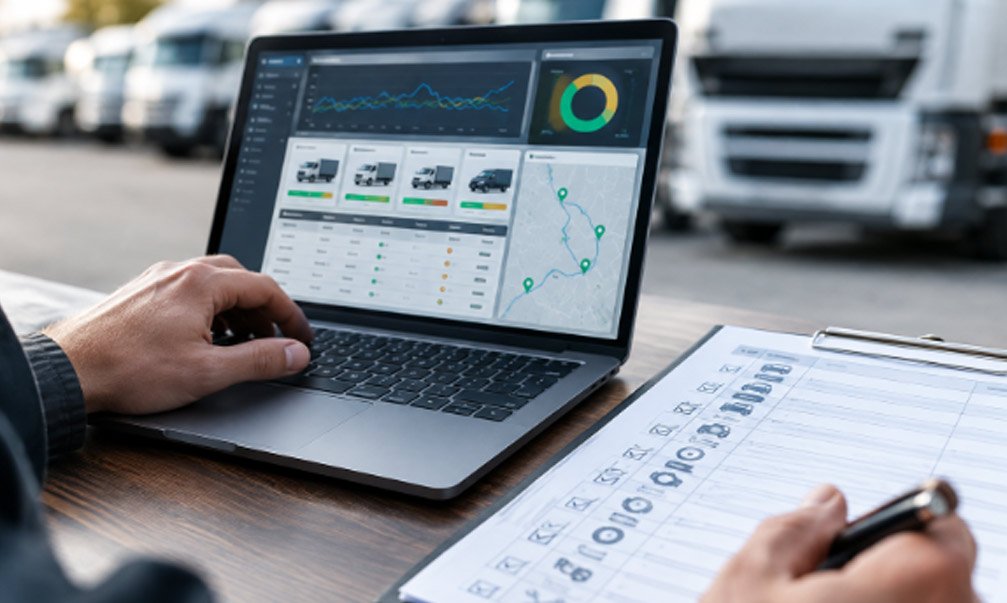
A useful dashboard contains a small group of measures that managers can review and act on. Consider tracking:
- Preventable incidents and completed coaching follow-up
- Vehicle availability and unscheduled downtime
- Fuel use per mile or engine hour
- Maintenance completion and missed service intervals
- Inspection compliance and recurring defects
- Route completion and repeat service delays
Operational leaders can review these measures weekly, while senior leaders may need only a concise monthly view that connects fleet performance to service quality, cost, and risk.
Use a Step-by-Step Implementation Plan
- Document current inspection, repair, dispatch, incident, and reporting processes.
- Choose the one gap creating the greatest safety risk or avoidable cost.
- Run a limited pilot with one team, route, location, or vehicle group.
- Train participants on the purpose, workflow, and expected result.
- Review early results for missed steps, false alerts, and added workload.
- Adjust the process before expanding it across the fleet.
- Compare results with the original baseline and communicate what changed.
Conclusion
Better fleet operations do not depend on technology alone. They depend on clear goals, useful data, preventive maintenance, practical coaching, and honest communication. Focus on a few important problems, give people clear ownership, and measure whether the process improves safety, reliability, and service. The best fleet programs help teams act before small issues become costly ones.
