


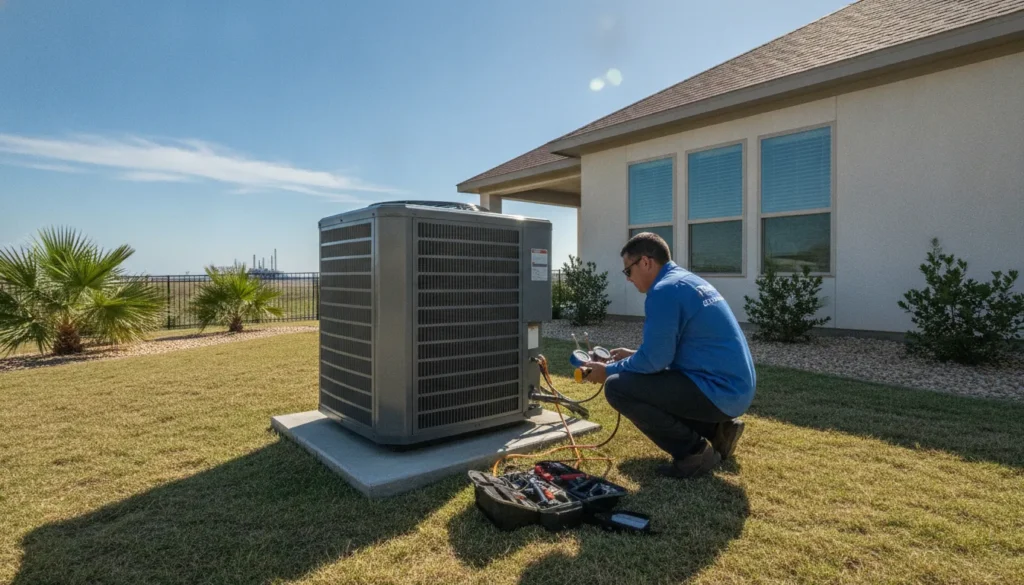
When afternoon heat pushes into the 90s in Frisco, an air conditioner that starts and stops every few minutes can quickly turn comfort into frustration. That pattern, called short cycling, wastes energy, raises indoor humidity, and stresses the compressor and condenser fan motor. Left unchecked, it can shorten equipment life and end in a midsummer breakdown. The good news is that short cycling follows recognizable clues. With a clear understanding of what you are hearing and seeing, plus a few safe checks, you can decide what to handle now and what to leave to a licensed technician so your system runs steady when you need it most.
What Short Cycling Looks and Sounds Like in a Central AC System
Short cycling is more than frequent on-off behavior. Typical signs include the outdoor condenser starting, running only a few minutes, then shutting down before the thermostat reaches the setpoint, followed by another quick restart. Indoors, you may notice uneven cooling, a thermostat that drops one degree then bounces back up, and rising humidity despite the AC running. In practice, Frisco Air Conditioning Repair oftenstartss by confirming that the cycle length is consistently brief and that the shutoff in’tt simply the fan winding down at the end of a normal call for cooling.
Two realistic scenarios show the pattern. First, a downstairs thermostat near a sunlit foyer calls for cooling at 3 p.m.; the condenser hums, the blower ramps up, cold air hits the thermostat directly from a nearby supply register, the call ends in under five minutes, and the house warms again. Second, after a filter is neglected, frost forms on the evaporator coil; the low-temperature safety ends the call, the system stops, ice melts for a few minutes, then the cycle repeats. In both cases, the symptom is quick cycling, but the causes are different and require different fixes.
Mechanical and Installation Issues That Trigger Rapid Cycling
Refrigerant problems are a common culprit. An undercharged system from a leak can run briefly, struggle to maintain evaporator temperature, and trip low-pressure protection, restarting once pressures equalize. You might see a frosted suction line at the air handler or hear the compressor click on and off. Airflow restrictions have a similar effect: a clogged return filter, matted evaporator coil fins, or closed supply registers raise static pressure, starve the coil of warm air, and lead to icing and safety shutoffs that shorten cycles.
Electrical and control faults also drive short cycling. A weak run capacitor can keep a compressor or condenser fan motor from staying online under load, while a pitted contactor may chatter and intermittently drop voltage. A stuck condensate float switch in an overflow pan can cut the Y-call to protect the ceiling, then re-engage once water settles. Thermostat placement matters too; units mounted in direct sunlight or above a supply register can be fooled into thinking the space is cool. Finally, an oversized system cools the air quickly but removes too little moisture, ending calls early and leaving the home clammy. The trade-off is clear: bigger is not better if it sacrifices cycle length and dehumidification.
Safe At-Home Checks Before You Call
Start with airflow. Replace a dirty filter with the correct size and a reasonable MERV rating for your system, typically MERV 8 to 11 for most homes, and make sure return grilles are not blocked by furniture. Open closed supply registers to lower static pressure. Next, look for icing: if the suction line at the indoor unit is frozen or the coil housing is sweating heavily, turn the system off at the thermostat and run the fan only for 30 to 60 minutes to thaw before further evaluation.
Confirm the thermostat isn’t being tricked by its surroundings. If a supply register blows directly on it, redirect the register vane or shield the thermostat from the airflow. Replace thermostat batteries if present, and check that the temperature differential or deadband is not set extremely tight. Outdoors, clear at least two feet of space around the condenser, remove grass clippings from the coil, and listen for the condenser fan motor staying on during the cooling call. Note actual cycle length with a timer; consistently under 10 minutes is a red flag that deserves professional diagnosis. Do not open electrical panels or handle refrigerant lines beyond visual checks.
What Technicians Test When Short Cycling Persists
A licensed technician will separate airflow, refrigerant, and electrical causes with specific measurements. They may measure total external static pressure with a manometer to see if duct restrictions or an undersized return are choking airflow, and adjust blower speed taps if needed. On the refrigeration side, they will read superheat and subcooling with gauges to evaluate charge, look for signs of a restricted metering device such as a TXV, and, if a leak is suspected, perform electronic leak detection and weigh in the correct refrigerant charge to manufacturer specifications.
Electrical reliability is checked as well. Expect microfarad readings on the run capacitor, inspection of a contactor for pitting or coil failure, and amp draws on the compressor and condenser fan motor against nameplate values. Technicians also verify low-voltage control signals, confirm that a condensate float switch is operating properly, and correct thermostat settings that force overly tight cycling. Where smart thermostats are in use, firmware updates and sensible schedule adjustments can prevent rapid on-off commands that wear out relays and contactors.
Keep Short Cycling From Coming Back in North Texas Heat
Prevention starts with steady airflow and clean heat-transfer surfaces. Replace filters on a schedule appropriate to your home’s dust load and pets, and have the evaporator and condenser coils cleaned during an annual tune-up. Keep shrubs trimmed and maintain suction line insulation to protect refrigerant temperatures. Flush the condensate line with a small amount of vinegar periodically to discourage algae that can lift a float switch and cut cooling mid-cycle. Avoid closing multiple supply registers to “push air” elsewhere; that raises static pressure and encourages icing. If equipment replacement is on the horizon, size the system to the home’s actual load to avoid the short, humid cycles that come with oversizing.
Finally, use your thermostat to support healthy cycle lengths. Set a consistent schedule rather than yo-yoing the setpoint all afternoon, and allow a modest temperature differential so the system runs long enough to dehumidify. If the condenser still starts and stops quickly after basic checks, do not ignore it. Short cycling accelerates wear on expensive components and rarely fixes itself. A focused diagnosis and correction now will restore steady operation, reduce utility waste, and protect your AC from the kind of failure that shows up on the hottest weekend of the summer.
