


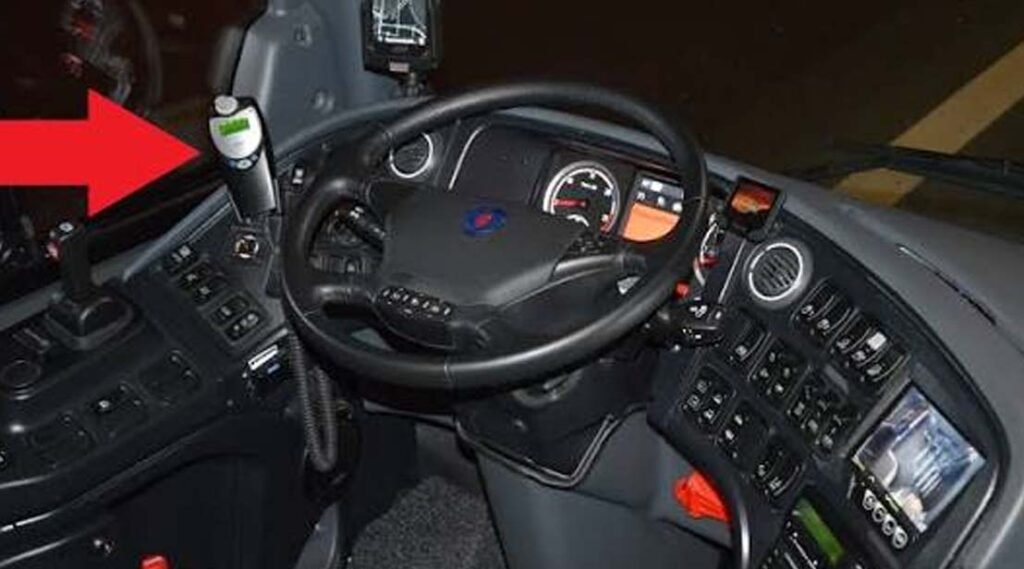
The work of installation of car breathalyzer for ignition interlock devices combines automotive electronics, forensic instrumentation and court reporting. This means that late calibration of an interlock device installed correctly can cause problems with compliance. On the other hand, an interlock device that has been correctly calibrated but spliced into the wrong wires during the install of the device will leave the client stranded in a parking lot. How these two halves of a job work is critical to establishing and running a good program and avoiding a stream of unnecessary service calls.
What a compliant installation actually involves
For work of this nature, the installation of an ignition interlock is a wiring job. Typically the handset for the handheld unit is connected to the control module. The control module is typically mounted out of sight behind the lower dash or under the column below. From the control module, wiring is connected to constant power, switched ignition, chassis ground and the starter circuit. The starter interrupt is the core functionality of an interlock. Rather than preventing the client from starting the vehicle in the first place, the interlock prevents the client from using the starter motor to attempt to restart the vehicle after having been driving under the influence.
Most approved devices have 4 primary connections for wiring. These connections are typically for constant power, switched ignition, chassis ground, and starter interrupt. There are also typically a number of Tamper Detection Inputs to connect to various sensors or switches such as an Engine Running Signal (from an RPM source or alternator output), a Camera (if required for program) and a Real Time Clock (typically backed up by an internal battery to record power interruptions, etc.).
Vehicle-specific complications worth pricing in
- Push-button start systems, where there is no conventional starter wire and the interrupt must be taken at a relay or body control module input.
- Hybrid and electric drivetrains, which have no cranking event and require an alternative inhibit strategy approved by the manufacturer.
- CAN bus architectures where cutting the wrong circuit sets permanent fault codes.
- Commercial vehicles with auxiliary batteries, upfitter circuits, or telematics units competing for the same power feeds.
Soldering and sealing connections where possible, rather than crimping them with a crimping tool, is recommended for all connections. It is recommended that each connection is recorded on the installation record as evidence in the event of the device having been fitted and then having malfunctioned, while the client denies having been under the influence of alcohol.
Calibration, and why it is a scheduled event rather than a repair
A sensor is calibrated by comparing the amount of alcohol in samples (such as mouthwash, a drink, breath, or a sample of fuel) to the amount in a certified reference gas (such as a dry gas cylinder or wet bath simulator) of a known concentration. The samples are compared to the reference gas within a pre-set tolerance to determine if the sensor has drifted and, if so, the interlock’s response curve is adjusted accordingly.
Dry gas and wet bath methods
Dry gas cylinders are commonly used for field service calibrations. These are small, portable, stable and traceable to a Certificate of Analysis. Wet bath type simulators are typically only used in laboratory settings. These require a controlled temperature, solution changes, etc. Therefore, it is very important to verify that the reference standard (fuel cell, etc.) used for calibration is in date and that the lot number is recorded on the service record.
Service intervals and the documentation trail
Most authorized monitoring authorities require monitoring to be conducted on a monthly basis (30 days) for proper function of car breathalyzer installation devices while the person is on the road. This will include checking the device for proper function and downloading of information stored in the device. Physical checks will be conducted to check for any attempts of tampering as well as to reset any lockout countdowns that may have occurred. If for any reason, scheduled service work is unable to be carried out (e.g. Due to reasons beyond your control) then lockout of your device may occur. Lockout of a device is a designed feature of car breathalyzer installation devices.
| Visit type | Typical work performed | Output for the file |
| Initial installation | Wiring, calibration verification, client training on sampling and rolling retests | Installation certificate filed with the monitoring authority |
| Routine service | Gas check, firmware update, data download, lockout counter reset | Periodic monitoring report |
| Violation reset | Early recall after a failed retest, missed retest, or tamper event | Incident report with event timestamps |
| Removal | De-wiring, restoration of factory circuits, final download | Removal certificate and closing report |
Reading the download intelligently
As an example of how technicians can explain failures on a vehicle, whether or not they have caused a lockout by means of a plausible mechanical problem or an attempt to bypass the device, for example, a startup failure, or a series of rolling retests, or even a power failure, and explain how each of these has caused a lockout.
Evaluating a provider before you commit vehicles to them
While the quality of the various devices on the market can vary, the quality of the work that is done to install and maintain them is generally much higher. While manufacturers of car breathalyzer devices for installation in cars can only certify that their devices meet the appropriate state’s approved standards for forensic breath testing, service centers can maintain the highest levels of discipline in their calibration, control of their schedules and the accuracy and completeness of their records. Drivers in southwest Virginia, for instance, are usually better served by booking car breathalyzer installation in Norton with a shop that can show that discipline on paper.
- Ask how gas cylinder certificates are tracked and whether expired lots are quarantined.
- Confirm turnaround time for a violation recall, since lockout clocks run short.
- Check whether reports are transmitted electronically and how quickly corrections are issued.
- Establish who handles after-hours lockout codes and what that costs.
- Request the shop’s approach to vehicles the manufacturer excludes from interlock fitment.
With great reliability comes the poor implementation of scheduling, documentation and client education around the monitoring devices. All aspects can be controlled by the monitoring device provider.
