


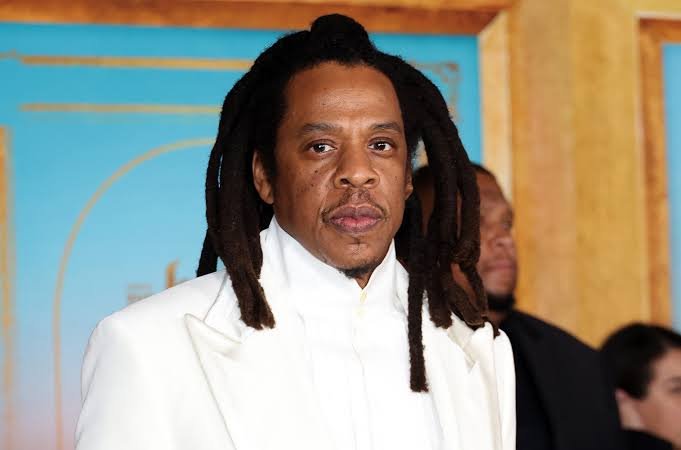
Jay-Z’s public story can look almost too neat from a distance. Shawn Carter grows up in Brooklyn’s Marcy Houses, becomes one of the most successful rappers in history, builds companies, marries another global music star, and turns himself into a billionaire entrepreneur. That summary is accurate, but it misses the parts that make his career unusual. His path was not a straight climb from hardship to wealth. It was a series of reinventions, reversals, failed plans, calculated exits, and unexpected returns.
The most revealing Jay-Z stories usually sit between the famous milestones. He spent years trying to convince the music industry that he deserved a record deal before deciding he could build the machinery himself. His first album became a classic, but it was not an immediate blockbuster. He announced a retirement at the height of his fame, then returned only a few years later. He developed a reputation as a businessman, yet many of his biggest ventures came from ideas already embedded in his lyrics: ownership, leverage, independence, and refusing to stay in someone else’s system forever.
At the center of all those changes is a distinction Jay-Z has spent decades exploring himself. Jay-Z is the constructed public figure: controlled, ambitious, competitive, and difficult to read. Shawn Carter is the person underneath that figure, shaped by family fractures, Brooklyn street life, artistic obsession, business instincts, marriage, fatherhood, and aging. The tension between those two identities helps explain why his career has lasted far longer than one musical era.
1. Before the Name Became a Brand
Shawn Corey Carter was born in Brooklyn on December 4, 1969, and grew up in the Marcy Houses public housing complex in Bedford-Stuyvesant. His father left the family when Carter was young, leaving his mother, Gloria, to raise him and his siblings. Marcy later became part of the mythology surrounding Jay-Z, but he rarely treated it as a simple hardship story. In his music, the neighborhood appears as a place of danger, competition, friendship, temptation, humor, and survival rather than a convenient opening chapter in a success narrative.
Music entered Carter’s identity early enough that one of his childhood nicknames was “Jazzy.” He reportedly spent long stretches rapping over a boombox at home, and the nickname eventually helped lead to “Jay-Z.” The name also reflected his relationship with Jaz-O, an older Brooklyn rapper who became an early mentor. Biography.com has also noted the connection often made to the J/Z subway lines near his Brooklyn neighborhood. By the late 1980s, the name Jay-Z was becoming attached to a rapper who was still far from famous.
Jay-Z’s earliest recorded appearances sounded different from the relaxed, measured style that later became his signature. On early collaborations with Jaz-O and appearances such as Big Daddy Kane’s “Show and Prove,” he used a faster, more crowded flow. That matters because it shows that the Jay-Z people later recognized instantly was not simply born fully formed. He adjusted his delivery as he learned how to make listeners focus on the line, the pause, and the idea rather than speed alone.
Carter was also living a second life that would become central to his writing. He has spoken and rapped for decades about selling crack cocaine before his music career became viable. Those experiences gave his early songs detail, but their importance goes beyond autobiography. Street dealing taught him to think in terms of risk, margins, reputation, territory, and control. Those concepts later reappeared in legitimate business settings. The point is not that one activity naturally prepared him for the other; the stakes and consequences were completely different. The connection lies in the mental vocabulary he carried forward.
One of the more striking details about Jay-Z’s development is how long success took. By the time Reasonable Doubt appeared in 1996, he was 26 years old, older than many rappers who were already stars. He had spent years near the industry without breaking through. That delay may have helped create the patient, watchful quality in his career. He entered the album business not as a teenager discovering fame in public, but as an adult who had already seen doors close.
2. The Rejections That Created Roc-A-Fella
Jay-Z’s business story began with failure in the most literal sense. Major labels repeatedly declined to sign him, despite his connections and growing reputation around New York. Instead of waiting indefinitely for approval, he joined Damon Dash and Kareem “Biggs” Burke to form Roc-A-Fella Records. That move is now easy to describe as entrepreneurial foresight, but at the time it was also a practical response to rejection. If established labels would not provide a route in, they would create their own route. GRAMMY.com has documented how Carter moved from selling his music independently to releasing Reasonable Doubt through Roc-A-Fella and a distribution arrangement with Priority.
The early Roc-A-Fella operation had none of the certainty that surrounds Jay-Z’s name today. Carter and his partners needed to create demand before they possessed the infrastructure normally used to create demand. Stories from that period describe music being sold from a car and promoted directly while the team tried to turn local attention into a real market. The strategy depended on ownership because there was no powerful company prepared to invest heavily in Jay-Z as an artist.
Reasonable Doubt arrived on June 25, 1996, and its later reputation can distort how modestly it began. The album did not debut as a giant mainstream event, and it did not immediately reach the top of the charts. GRAMMY.com reports that it sold roughly 420,000 copies by the end of 1996, strong enough to establish Jay-Z but far below the commercial scale he would reach later. It became more prestigious over time as listeners and critics returned to its dense writing, detailed street narratives, and controlled delivery. In 2025, nearly three decades after its release, the album entered the GRAMMY Hall of Fame.
The album also introduced one of Jay-Z’s most useful artistic tricks: presenting ambition without pretending that ambition is clean. Reasonable Doubt is filled with confidence, but it also contains anxiety, paranoia, guilt, and the knowledge that money can make a person powerful without making him secure. That complexity separated it from a simple victory lap. Jay-Z sounded like someone who wanted wealth while already understanding some of its costs.
The decision to build Roc-A-Fella also changed the way Jay-Z understood his own career. A signed artist can focus mainly on music while a label handles distribution, marketing, accounting, and negotiations. Jay-Z had to think about the record and the organization releasing it at the same time. That dual perspective—artist and owner—became one of the defining features of his public identity long before his investments attracted business-magazine coverage.
3. The Rapper Who Learned to Write Without Writing
Jay-Z’s recording method became one of the best-known unusual facts about his creative process. He is famous for composing many verses in his head rather than writing them on paper. The Rock & Roll Hall of Fame describes his raps as often unwritten, while later artists have repeatedly discussed the influence of that method. The practice does not mean that every line appears instantly or without revision. It means that he organizes and edits ideas mentally before recording them, using memory as the page.
The Blueprint showed how powerful that approach could become when paired with the right production. Released in 2001, the album arrived during a highly competitive period in New York rap and included “Takeover,” his famous attack on Nas and Prodigy. Yet the album’s lasting importance extends beyond the feud. Producers including Kanye West and Just Blaze helped create a warmer soul-sample sound that left space for Jay-Z’s voice. He did not need to fill every second. His authority increasingly came from sounding comfortable enough to wait.
Competition played a major role in Jay-Z’s development because he came from a rap culture that treated status as something to be defended. His rivalry with Nas became the most famous example, but it was part of a wider environment in which verses, guest appearances, sales, and public perception were constantly compared. Jay-Z’s response to competition was rarely to retreat into one style. He adjusted. He could make dense street records, club singles, pop collaborations, battle tracks, introspective songs, and corporate anthems without giving up the recognizable rhythm of his voice.
The Black Album turned that adaptability into a deliberate farewell. Released in 2003, it was promoted as Jay-Z’s final studio album. The project drew on several major producers, including Rick Rubin, Timbaland, the Neptunes, Kanye West, and Just Blaze, almost as if he were assembling a final exhibition of what he could do. Tracks such as “99 Problems,” “Dirt Off Your Shoulder,” and “Encore” sounded designed for arenas, while “December 4th” returned to his childhood story.
4. The Retirement That Turned Into a Career Change
Jay-Z’s 2003 retirement made sense if “retirement” meant leaving the exhausting cycle of solo albums, promotion, touring, and constant competition. It made much less sense if it meant leaving music. He became president of Def Jam in 2004, moving from artist negotiating with record executives to one of the executives making decisions about artists. The transition was unusual because he had spent the first phase of his career building an identity around independence from traditional labels.
The Def Jam job revealed another contradiction in Jay-Z’s career. He had once needed Roc-A-Fella because established record companies would not give him the deal he wanted, yet he eventually became president of one of hip-hop’s most historically important labels. His story had moved from trying to enter the building to running part of it. That shift also gave him a different view of how hits, careers, budgets, and label politics worked.
Retirement lasted only about three years as far as solo albums were concerned. Kingdom Come arrived in 2006, and its existence confirmed what many listeners had suspected: Jay-Z could step away from the album cycle, but he was not finished with rap. GRAMMY.com’s retrospective on his career notes the three-year retirement, while his later catalog shows how quickly the return became another full era rather than a one-off comeback.
The return also forced Jay-Z to address a problem most rappers had not yet faced on such a scale: how does a hip-hop star age in public? Rap had built much of its commercial power around youth, newness, rivalry, and rapid cultural change. Jay-Z was entering his late thirties with far more money and institutional power than he had possessed on Reasonable Doubt. Repeating the same perspective would have sounded artificial, yet abandoning the persona that made him famous carried its own risk.
5. The Businessman Was Hidden in the Lyrics
Jay-Z’s rise as an entrepreneur is sometimes presented as a second career that started after rap made him rich. His catalog suggests something more continuous. Ownership, brand power, negotiation, and the difference between earning money and controlling assets had interested him long before financial publications began tracking his fortune. The businesses changed, but the fascination with leverage remained.
Rocawear offered an early example of turning cultural influence into ownership. Jay-Z and Damon Dash co-founded the clothing brand in the late 1990s, when hip-hop fashion was becoming a major commercial force. The move allowed Jay-Z to do more than wear someone else’s product in a video. He could participate in the economics created by his own image and audience.
The 40/40 Club extended that idea into hospitality and nightlife. The first location opened in New York in 2003, combining sports-bar imagery with an upscale club format. Jay-Z was moving into a business where every physical detail mattered, from televisions and lighting to food service and restaurant chairs. The club also demonstrated a pattern that would recur throughout his portfolio: connect his cultural identity to a product, then retain a position deeper than that of a celebrity spokesperson.
Roc Nation became the clearest expression of that strategy. Founded in 2008, the company expanded beyond a traditional label model into artist management, publishing, touring, production, brand work, and later sports representation. Roc Nation Sports followed in 2013. The company allowed Jay-Z to participate in careers across entertainment and athletics rather than relying solely on revenue from his own recordings. Roc Nation describes itself as a full-service entertainment company operating across those areas.
Jay-Z’s involvement with the Brooklyn Nets added a symbolic dimension to his business identity. He held a small ownership stake and became closely associated with the franchise’s move from New Jersey to Brooklyn. He later sold the stake as Roc Nation Sports expanded, avoiding conflicts tied to representing professional athletes. The financial size of his original stake mattered less culturally than the image: the rapper who had spent his childhood in public housing was now connected to the ownership group of a major professional team in his home borough.
Tidal represented a more ambitious attempt to change the economics of music distribution. Jay-Z acquired the streaming service in 2015 with a group of artist partners and positioned it around artist ownership and higher-quality audio. The company faced criticism and intense competition, but the move was consistent with his long-running concern about who controls the platform between artist and audience. He later sold a majority stake to Block while retaining an interest.
Alcohol brands became another major part of his wealth. Jay-Z acquired ownership in Armand de Brignac champagne, widely known as Ace of Spades, and later sold 50 percent to LVMH in 2021. He also held a significant position in D’Ussé cognac before Bacardi acquired a majority interest in 2023. Forbes estimated Jay-Z’s fortune at about $2.8 billion in 2026, with businesses, investments, music rights, art, and other assets contributing to the figure.
His business evolution also changed the meaning of success inside his music. Early Jay-Z often measured progress through cash, cars, clothes, travel, and visible access. Later Jay-Z increasingly talked about generational wealth, property, intellectual ownership, and leaving assets to children. The symbols became less temporary. He was no longer only describing what money could buy today but what ownership could still produce years later.
6. When Shawn Carter Became More Visible Than Jay-Z
Jay-Z’s most surprising late-career move was not another company acquisition but a deeper level of personal disclosure. The public persona had always offered autobiographical detail, yet it usually came through control. He could describe violence, drug dealing, betrayal, or ambition while sounding emotionally protected. 4:44, released in 2017, changed that balance.
The album confronted marriage problems, infidelity, family pain, masculinity, money, and the emotional habits that had shaped him. “Kill Jay Z” opened by attacking parts of his own ego, while the title track centered on apology and relationship damage. “Smile” addressed his mother Gloria Carter’s sexuality and the pressure of living privately for years. “The Story of O.J.” shifted the discussion toward race, credit, investment, and generational wealth. GRAMMY.com has described 4:44 as one of the most personal records in his catalog.
Fatherhood also changed the way Jay-Z talked about his past. Becoming a parent did not erase the hustler stories that had built his mythology, but it altered their frame. Actions once presented through survival and ambition could now be reconsidered through responsibility, inheritance, and what children learn from their parents. That shift gave his later writing a tension that money alone could not solve.
Therapy and emotional accountability became unusually public subjects for someone who had built such a guarded image. In later interviews, Jay-Z discussed the work required to understand his behavior and repair relationships. His willingness to put that process into music challenged the idea that maturity in rap had to mean becoming less revealing or less competitive. The competition could turn inward.
A 2026 GQ interview showed that the 4:44 period was not something he treated as a temporary confessional experiment. Jay-Z described that body of work and the performances around it as part of a real healing process, while also explaining that he no longer feels pressure to release solo music merely to remain visible. By then, 4:44 had been his last solo studio album for nine years. His absence from the album cycle had become another form of control: he could participate in music without allowing the market’s demand for constant content to set his schedule.
Recognition continued even while his solo output slowed. Jay-Z became the first rapper inducted into the Songwriters Hall of Fame in 2017 and entered the Rock & Roll Hall of Fame as a performer in 2021. The Recording Academy currently lists 25 Grammy wins and 89 nominations, figures that reflect both his own recordings and his work as a songwriter and collaborator. Those honors place institutional approval around a career that began partly because institutions did not know what to do with him.
The irony of Jay-Z’s career is that the artist once rejected by labels eventually became bigger than the role of recording artist itself. Music created the opening, but he kept widening what could fit through it: record executive, clothing owner, club owner, manager, sports representative, streaming investor, liquor investor, art collector, activist, husband, and father. None of those identities fully replaced the rapper because the rapper remained the source of the language that connected them.
The deeper story is therefore not a simple progression from poverty to money. Jay-Z’s career is about controlling changing forms. At first, control meant surviving an unstable environment. Then it meant releasing his own record when labels said no. Later it meant choosing producers, controlling a company, negotiating equity, owning rights, deciding when to retire, deciding when to return, and eventually deciding which parts of Shawn Carter could appear in public.
That circular quality may be the most unusual part of his story. Jay-Z spent the first half of his career trying to become too powerful to ignore and much of the second half learning that power did not remove the need for honesty, family, or self-examination. The lesser-known details and side stories matter because they reveal the machinery behind the famous outcome. Long before the billionaire rankings and Hall of Fame ceremonies, there was a rejected rapper selling his own music and deciding that someone else’s refusal did not have to be the final answer.
