


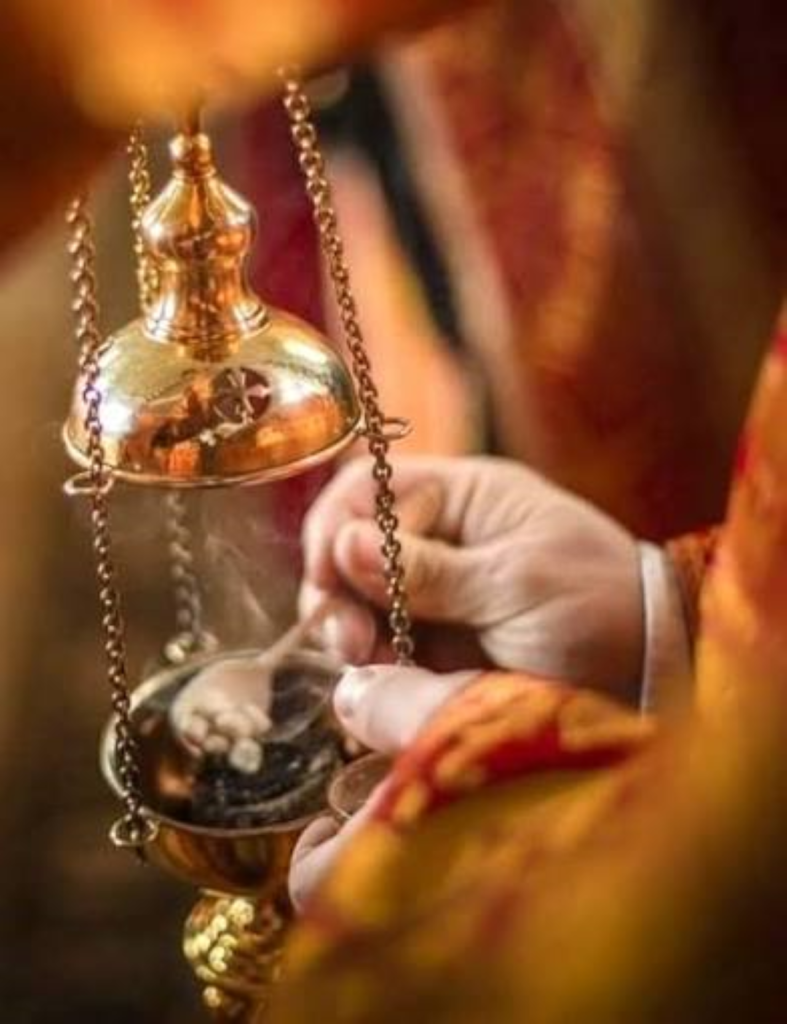
Incense has played an important role in Christian worship for centuries. In the Orthodox Christian tradition, its fragrance is closely connected with prayer, reverence, and the liturgical life of the Church. The rising smoke of incense can serve as a visible reminder of prayers offered to God, while its fragrance contributes to the sensory experience of worship.
Today, incense remains an important part of services and is also used by many Orthodox Christians in their homes. Understanding its history and symbolism can provide a deeper appreciation for this enduring tradition.
The Ancient Roots of Incense
The use of incense predates Christianity and appears throughout biblical tradition. Aromatic substances were used in religious worship in the ancient world, and Scripture contains numerous references to incense.
One of the most familiar biblical associations is between incense and prayer. Psalm 141:2 compares prayer to incense offered before God. This imagery has remained significant within Orthodox Christianity and helps explain why incense continues to have such a prominent place in worship.
Over generations, the practice became deeply integrated into the liturgical traditions of Orthodox churches.
The Symbolism of Orthodox Incense
Incense carries several layers of symbolism in Orthodox worship.
The smoke rising upward is commonly understood as representing prayer ascending toward God. The fragrance also contributes to an atmosphere of reverence and reminds worshippers that liturgy engages the senses as well as the mind.
During services, clergy may cense the altar, icons, clergy, and congregation. The practice expresses honor and reverence while directing attention toward God.
For Orthodox Christians, these actions are part of a larger liturgical language in which physical objects and gestures communicate spiritual realities.
What Is Orthodox Incense Made Of?
Traditional incense is commonly produced from aromatic resins, with frankincense being one of the best-known ingredients. Other varieties may contain fragrant oils, herbs, flowers, spices, or other natural aromatic materials.
The combination of ingredients determines the character of the fragrance. Some varieties are sweet and floral, while others have richer resinous, woody, or spicy aromas.
Different Orthodox communities and suppliers may offer their own blends, giving worshippers an opportunity to discover fragrances that they find particularly meaningful.
Using Incense at Home
Although incense is strongly associated with church services, it can also be used in an Orthodox home prayer space.
A home icon corner may include icons, candles, an oil lamp, prayer books, and other devotional items. Incense can complement this environment and create a familiar fragrance associated with church worship.
For those looking to build or expand a home devotional space, an orthodox christian supply can include incense as well as other traditional items used for prayer and worship.
When burning incense at home, safety should always be a priority. Charcoal used for burning resin incense reaches very high temperatures and should be placed in a proper heat-resistant censer. Incense should also be kept away from curtains, paper, wood, and other flammable materials.
How to Choose Incense
There are many different incense fragrances available, so choosing one can be a personal experience.
Beginners may want to start with smaller quantities of several varieties rather than committing to one fragrance immediately. This makes it easier to discover preferences for floral, sweet, earthy, woody, or resinous aromas.
The size and ventilation of the room should also be considered. A particularly strong incense may be better suited to a larger or well-ventilated space, while a lighter fragrance may be preferable in a smaller prayer area.
Incense and the Sensory Experience of Worship
Orthodox worship is highly sensory. Icons provide visual imagery, chanting provides sound, candles provide light, and incense provides fragrance.
Together, these elements create an environment that helps distinguish liturgical worship from everyday life.
The fragrance of incense can also become closely connected with personal memories. Someone may associate a particular scent with Sunday services, Pascha, a monastery, or time spent praying with family.
In this way, incense can connect present-day worship with personal and communal memories.
A Tradition That Continues
Orthodox incense is more than a pleasant fragrance. Its significance comes from its connection with prayer, worship, reverence, and centuries of Christian tradition.
For those interested in exploring different varieties of orthodox incense, the process can also be an opportunity to learn more about the customs and symbolism surrounding its use.
Whether used during a church service or carefully burned in a home prayer space, incense continues to provide a tangible connection to the rich liturgical heritage of Orthodox Christianity.
Its fragrance may disappear quickly, but the tradition and symbolism behind it remain an enduring part of Orthodox worship.
