


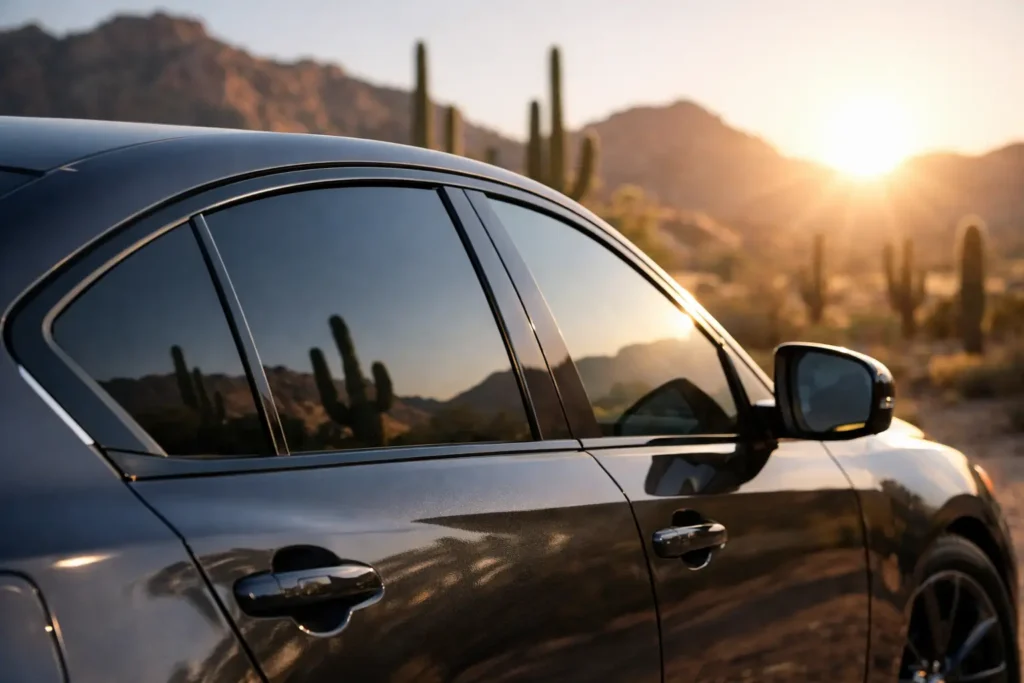
Arizona’s sun loads your vehicle with heat through every square inch of glass. Drivers often choose tint by how dark it looks, but darkness alone doesn’t predict how cool the cabin will feel. The spectrum that bakes your seats is largely infrared, while the UV portion quietly fades upholstery and damages skin. A smart choice weighs infrared rejection, UV blocking, visible light transmission, reflectivity, and the realities of dawn and nighttime driving. This guide explains how film type and shade interact with desert conditions so you can stay cooler on the freeway without turning your windshield and mirrors into black mirrors after sunset.
-
Arizona Sun on Glass: IR, UV, and Cabin Heat
The greenhouse effect in a parked car starts when short-wave energy passes through the windshield and side glass, then reradiates as long-wave heat that lingers. That is why a dark film with poor infrared rejection can still leave the dash scorching, while a lighter ceramic with high IR rejection can noticeably soften steering wheel temperatures. Shops such as AZ Tint Pros often explain the difference between visible light transmission (VLT), which affects how dark the film looks, and infrared blocking, which drives most of the comfort you feel in your seat and on your skin.
A common mistake is picking film by percentage alone. Two films labeled the same VLT can behave very differently in Arizona sun. For example, a family SUV with factory privacy glass in the rear can still feel like an oven because that glass is mainly dyed for appearance. Adding a true heat-rejecting layer to those rear windows and a lighter, high-IR film to the front doors often brings the cabin into balance without making the front side windows too dark for safe or legal driving.
-
Film Types Compared: Dyed, Carbon, Ceramic, and Metalized
Dyed films reduce glare and add privacy at a budget price, but the dye takes the brunt of the sun and can fade or shift color more readily under desert UV. Carbon films step up with better IR absorption and more stable color. Ceramic films use nano ceramic particles to reject a broad swath of infrared while keeping reflectivity low, which helps both heat control and visibility through the glass. Metalized films shine at reflecting energy, yet their metallic layers can interfere with AM/FM reception, GPS, keyless entry fobs, and even RFID toll transponders in some vehicles.
The trade-off is straightforward: higher-performing ceramics usually cost more but deliver better heat rejection at lighter VLTs, while dyed films are affordable but mainly change looks. If you drive for rideshare at night, a lighter ceramic shade can keep the cabin cooler without making it hard to spot curbs or cyclists. If you haul tools and want cargo privacy, a mid-tone carbon in the rear doors and hatch can reduce glare while preserving decent night visibility in the mirrors. Always confirm local law before picking any shade.
-
Picking a VLT That Works in Day and Night
Dark tint helps with midday glare bouncing off pale concrete and chrome, but if it’s too dark, night driving becomes stressful. Reduced VLT limits how much signal reaches your eyes from lane markers, pedestrians in dark clothing, and side-view mirror images. A clear or very light ceramic windshield film, where allowed, can cut infrared heat and UV without obviously dimming the view. Some drivers prefer a legal eyebrow or visor strip at the top of the windshield to tame sunrise and sunset while keeping the rest of the glass brighter for dusk commutes.
Desert highways demand both glare control and contrast. In practice, that means pairing a slightly lighter VLT on the front doors with a comparable or darker film on the rear section so mirrors remain useful after dark. Highly reflective films can introduce ghosting or internal reflections against the dash at night. Look for films with low interior reflectivity and verify the label or spec sheet rather than judging by sample cards alone. And always match any plan to the letter of your state’s tint code, especially on the windshield.
-
Compatibility Checks With Modern Vehicles
Factory privacy glass in many SUVs and trucks looks dark from the outside, but it isn’t the same as a heat-rejecting film. Layering a quality IR-rejecting film over that glass can improve comfort. On the back window, the defroster grid sits on the glass surface; careless removal or aggressive scraping can damage it. The dot matrix frit band around window edges can prevent perfect adhesion and leave a light halo if not handled thoughtfully with proper trimming or edge treatment. Also consider ADAS cameras and rain sensors near the windshield, and keep films and adhesives away from their apertures as required.
If your truck uses a toll transponder, metalized films can reduce its read range on the windshield. Keyless entry antennas and satellite radio modules sometimes sit near the rear quarter glass, where a metallic layer may also dampen signal strength. Carbon and ceramic films avoid that risk while still cutting heat. For vehicles with heated side mirrors or blind spot radar modules embedded near the glass, ask the installer where the electronics are located before choosing a film type to prevent unintentional interference.
Arizona-Specific Aftercare: Curing, Cleaning, and Longevity
Freshly installed tint contains a thin layer of moisture under the film. In a hot, arid climate, that moisture evaporates quickly, but edges still need time to settle into rubber seals. Expect light haze or small water pockets as the film cures, and avoid rolling windows down until your installer’s recommended time has passed. Parking in shade reduces the chance of dust settling on soft edges during the first day. Do not scrape the inside glass with blades, and keep seatbelt buckles from snapping against freshly tinted windows to avoid edge nicks.
Long-term, use ammonia-free glass cleaner and a clean microfiber towel so the film’s hard coat stays clear. Grit trapped in window channels can scratch edges as you raise and lower the glass, so vacuum those felt-lined tracks occasionally. Ceramic and carbon films resist fading better than basic dyed layers, but no film is scratch-proof. If you transport pets, consider a pet cover that shields side windows near cargo areas to prevent claw marks. A little care stretches the life of your tint and keeps visibility crisp through monsoon rain and sun-baked afternoons alike.
Choosing tint for desert driving is about more than darkening the glass. Prioritize infrared rejection for comfort, pick a VLT that preserves night visibility, and match film chemistry to your vehicle’s electronics and glass features. Light, high-IR ceramics can cool the cabin without dimming the world, while mid-tier carbons handle glare with stable color in long summers. Confirm the legal limits where you live, ask to see film specs rather than just sample cards, and plan simple aftercare so the result looks sharp for the long haul.
