


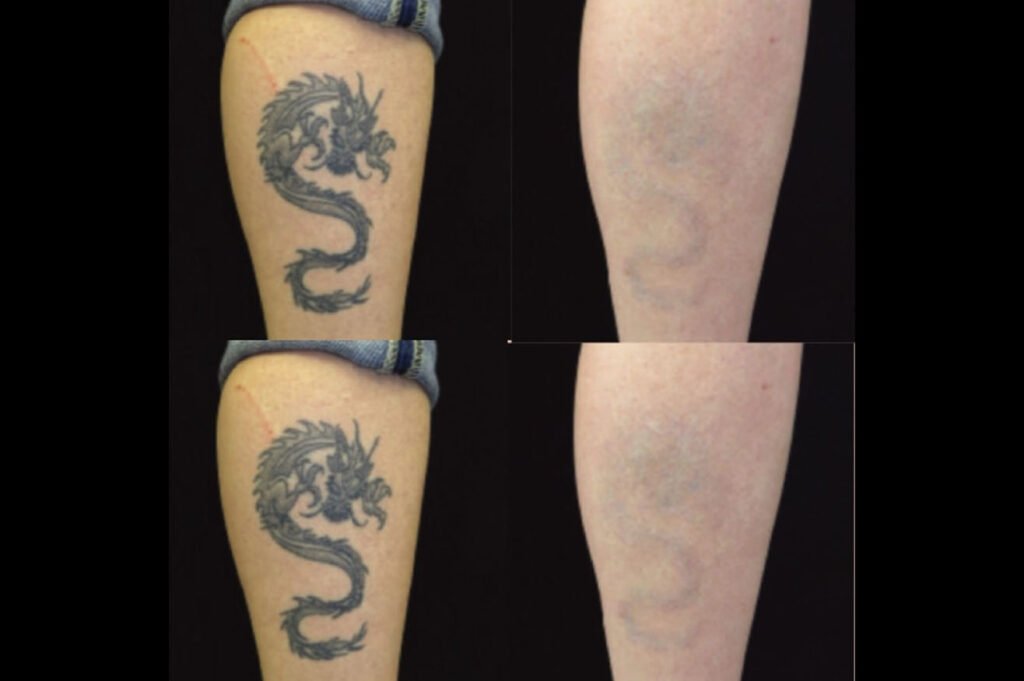
A cover-up tattoo works best over skin that has faded, not skin that’s still holding onto solid black lines and dense saturation. If you’ve booked a cover-up appointment and the artist mentioned laser sessions beforehand, or if you’re planning ahead on your own, understanding the fading process will save you time, money, and disappointment when the new design goes on.
Why Fading Matters Before a Cover Up
A cover-up isn’t just a bigger tattoo placed on top of an old one. It’s a careful balance of dark and light values designed to trick the eye into seeing something new. If the original tattoo is too dark or too saturated, the artist has a limited palette to work with, which usually means the new design has to be significantly darker and more restrictive in color than you’d like.
Fading breaks down the ink particles enough that they scatter less light and sit less densely under the skin. This gives the new tattoo room to breathe. Even a 20-30% reduction in density can open up options that weren’t possible before, including lighter colors, more detailed linework, and designs that don’t need to rely entirely on heavy black shading to hide what’s underneath.
Laser Removal Sessions
Laser tattoo removal is the most reliable and predictable way to fade a tattoo before a cover-up. The laser targets ink particles with pulses of light energy, breaking them into smaller fragments that the body’s lymphatic system gradually clears away over several weeks.
For cover-up purposes, most people don’t need full removal, just partial fading. This typically takes fewer sessions than removing a tattoo entirely, often somewhere between two and six treatments depending on the ink density, colors used, and how the skin responded to the original tattooing process. Black and dark blue inks respond fastest, while greens and yellows can be more stubborn.
Sessions are usually spaced six to eight weeks apart to give the skin time to heal and the lymphatic system time to process the broken-down ink. Rushing this timeline doesn’t speed up results and can increase the risk of skin damage.
What to Expect During the Fading Process
The skin will look different after each session. Immediately after treatment, expect redness, swelling, and sometimes small blisters or scabbing over the following days. This is a normal part of the body’s healing response and shouldn’t be picked at or scratched.
Over the following weeks, the treated area will often look frosted or slightly lighter, though the true extent of fading becomes clearer after full healing, usually around four to six weeks post-session. Take photos after each appointment in consistent lighting so progress is easy to track and share with the cover-up artist later.
Patience matters here. Skin that looks only mildly faded a week after treatment can look noticeably lighter a month later as the body continues clearing ink particles.
Finding the Right Provider
Not all removal equipment or technicians produce the same results, and this is one area where research pays off. Look for a provider using a Q-switched or picosecond laser, since these are the industry standard for breaking down ink effectively while minimizing damage to surrounding skin. Ask how many sessions similar tattoos have typically required and request to see before-and-after photos of comparable work.
For anyone located in the area, Edmonton tattoo removal specialists have become a solid option for people preparing for cover-ups, offering consultations that assess ink type, skin tone, and tattoo age before recommending a treatment plan. A good consultation should include a realistic estimate of how many sessions to expect and honest information about how much fading is achievable before the cover-up artist takes over.
Communicating With Your Cover-Up Artist
Before starting laser sessions, talk to the artist doing the cover-up. Some have specific preferences about how much fading they want to see, and some can work with less fading than others depending on their style. Bring reference images of the design you’re hoping for so the artist can advise on how much the original ink needs to lighten to make that design possible.
Check in periodically during the fading process, especially if the timeline stretches past three or four sessions. Sending progress photos lets the artist confirm whether the fading is sufficient or whether one or two more sessions would meaningfully expand the design options.
Timing the Cover Up
Skin needs to fully recover from laser treatment before it’s ready for a new tattoo. Most artists want at least six to eight weeks between the final laser session and the cover-up appointment, though some recommend waiting up to three months if the skin shows any lingering redness, texture changes, or sensitivity.
Tattooing over skin that hasn’t fully healed from laser treatment increases the risk of poor ink retention and unnecessary trauma to skin that’s already been through a lot. A slower, well-timed approach almost always produces a cleaner final result.
Getting the Best Result
Fading a tattoo before a cover-up isn’t a step to rush through. Spacing sessions properly, tracking progress honestly, and staying in communication with the artist handling the final design all contribute more to the end result than simply doing “more” laser sessions. The goal isn’t erasing the old tattoo entirely, just clearing enough space for the new one to shine on its own terms.
