


Springville’s mix of summer heat, winter cold snaps, and varied housing stock makes ductless heat pumps a practical way to add comfort without opening walls for new ductwork. Yet the payoff depends on design. Zoning, head placement, line-set routing, and even outdoor unit height above grade can make the difference between steady comfort and constant remote fiddling. This article focuses on the planning decisions that shape day-to-day performance: where zones begin and end, which indoor unit style suits each room, how winter conditions affect the outdoor condenser, and what small installation details prevent water drips and callbacks later.
Start With Loads and Layout, Not Just Square Footage
For homeowners considering ductless mini-splits in Springville, UT, begin with a room-by-room load calculation rather than dividing the house by square feet alone. A Manual J-style assessment looks at insulation levels, air leakage, ceiling height, window area and orientation, and use patterns. A bonus room over the garage with knee walls and west-facing glass may need a higher BTU capacity than its floor area suggests, while a shaded basement family room often needs far less. In multi-bedroom halls, recognize that closed doors block airflow; a single high-wall head in the hallway will not cool or heat behind closed doors effectively.
Layout drives zoning boundaries. Spaces with shared airflow, like an open kitchen-living area, can often work as one zone when a head’s throw reaches the far wall. Compartmentalized spaces, like a primary suite plus closet and bath, may perform better with a small additional unit or a different head location to keep humidity and temperature even. If you plan to set back temperatures in seldom-used rooms, confirm that the selected outdoor condenser can modulate down (turndown ratio) without short cycling when only one small head calls.
Choosing Between Single-Zone and Multi-Zone Systems
Single-zone systems pair one outdoor condenser with one indoor air handler. They typically have strong turndown capability, simple refrigerant circuits, and straightforward service. Multi-zone systems connect two to five (or more) indoor units to one outdoor unit, sometimes via a branch box. They simplify exterior footprint and can lower total installed amperage, but they add refrigerant volume, more connections, and capacity sharing. On a mild spring day, a multi-zone condenser serving only one tiny bedroom may cycle more than a dedicated single-zone unit unless the model has excellent low-load modulation.
Consider realistic use. Scenario one: a detached studio or basement office used all day benefits from a single-zone 9k to 12k BTU head with a quiet outdoor unit set on a wall bracket above snow height. Scenario two: a main floor with an open great room, dining space, and kitchen may suit a multi-zone system with an 18k to 24k BTU head in the great room and smaller heads in two adjacent bedrooms. The trade-off is flexibility versus redundancy: one multi-zone condenser is compact, but if it is offline for service, all connected rooms lose conditioning; separate single-zone condensers isolate risk.
Placing Indoor Air Handlers for Balanced Airflow
Head placement governs airflow patterns. High-wall units work well when mounted with clear intake and discharge paths, typically 7 to 8 feet above the floor with at least several inches of clearance above and to the sides. Aim the supply air to sweep the room’s longest dimension, and avoid boxing the unit into an alcove, behind ceiling beams, or above tall cabinetry. A common mistake is placing a single head to serve multiple closed bedrooms via a hallway; without a return path, rooms behind closed doors stay stratified and uncomfortable. In large great rooms with vaulted ceilings, a ceiling cassette can distribute air more evenly, while a floor-mount unit suits rooms with low knee walls or limited wall space. If drafts at a bed or desk are a concern, use the louver vane controls or a wired wall controller to fine-tune direction and fan speed.
Outdoor Unit Location for Utah Winters
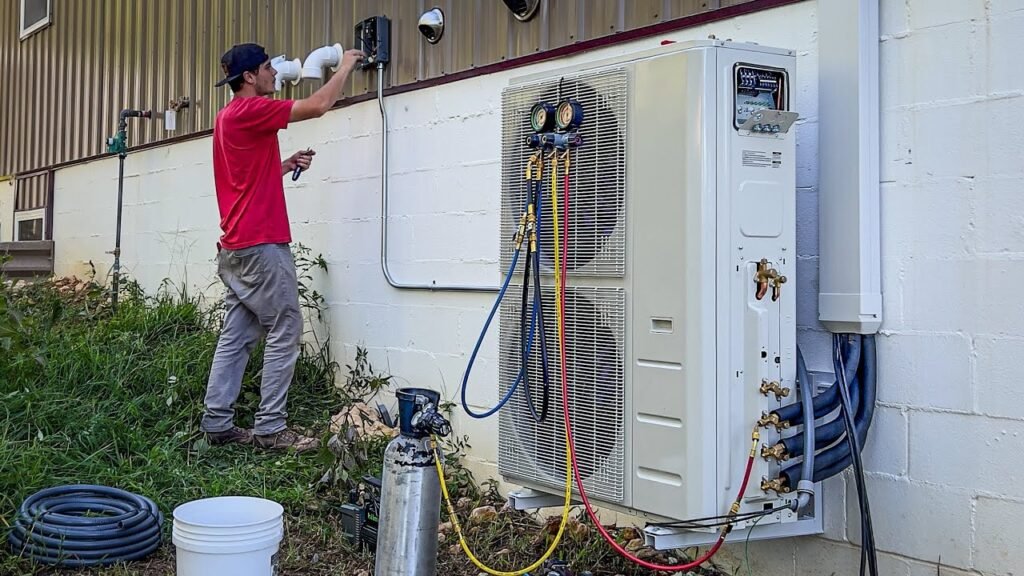
Cold-weather performance hinges on siting. Keep the condenser elevated on a stand above typical snow accumulation and roof-shed zones; 8 to 12 inches above finished grade helps keep the coil clear during storms and defrost cycles. Provide at least 12 to 24 inches of free space around the coil face and rear for airflow. Avoid spots under roof valleys or eaves where icicles or drifting snow can bury the fan shroud. Plan for defrost water: route melt to gravel or a drain that will not ice over walkways. If the home experiences frequent inversions and freezing fog, consider a low-ambient-rated heat pump with crankcase heat and a pan heater accessory recommended by the manufacturer. Do not build tight enclosures; they trap recirculated air and reduce capacity during both cooling and heating.
Electrical, Line Sets, and Condensate: Details That Prevent Callbacks
Electrical service affects reliability. Most mini-splits need a dedicated 240-volt circuit sized to nameplate MCA/MOP, with a lockable disconnect within sight. Confirm wire gauge and breaker size per the installation manual, and use a weather-resistant whip. Surge protection at the service panel is a prudent add-on for inverter-driven compressors. For refrigerant piping, respect maximum line-set lengths and elevation changes; excessive vertical lifts can require oil traps, and too many tight bends add pressure drop. Protect the line set and control wire in UV-stable line hide outdoors, sleeve wall penetrations, and seal them to block pests and moisture. During brazing, nitrogen purging prevents oxidation; evacuate to a deep vacuum and weigh in any additional charge to achieve stable superheat and subcool targets.
Condensate handling is a frequent failure point. Gravity drains should have continuous fall, typically about a quarter-inch per foot, with a trap and cleanout where required. If the route crosses an unconditioned area, insulate the tubing or reroute to avoid freezing. Where gravity is impossible, use a mini condensate pump with a float safety switch and accessible service panel. Test the drain with water before closing soffits or siding. If tying to a floor drain or condensate neutralizer, follow local code to prevent sewer gas and ensure proper disposal.
Maintenance Habits That Keep Performance High
User care keeps efficiency and comfort on target. Rinse or vacuum washable intake filters every month during peak pollen or wildfire smoke periods, and gently brush dust from indoor coil fins if accessible. Outside, keep shrubs and leaves at least 18 inches from the condenser and lightly rinse the coil with low-pressure water in spring and fall. In winter, clear snow away from the base and do not cover the unit; steam and hissing during defrost are normal. Once a year, have a technician check refrigerant charge, electrical connections, and condensate pumps, and clean blower wheels that can accumulate lint. Replace remote batteries, confirm the time schedules on wired controllers, and review vane positions at the change of seasons to prevent cold drafts or stagnant corners.
Thoughtful zoning and placement pay dividends in Springville’s climate, where July heat and January cold both stress a system. Define zones by airflow reality, not just walls on a floor plan. Size heads to loads rather than area alone, mount them where they can breathe, and set the condenser where snow and defrost water cannot interfere. Attention to line-set limits, electrical sizing, and condensate routing reduces nuisance issues later. With these decisions made up front, a licensed HVAC contractor can install a ductless system that runs quietly, modulates smoothly, and keeps rooms comfortable year-round.
