


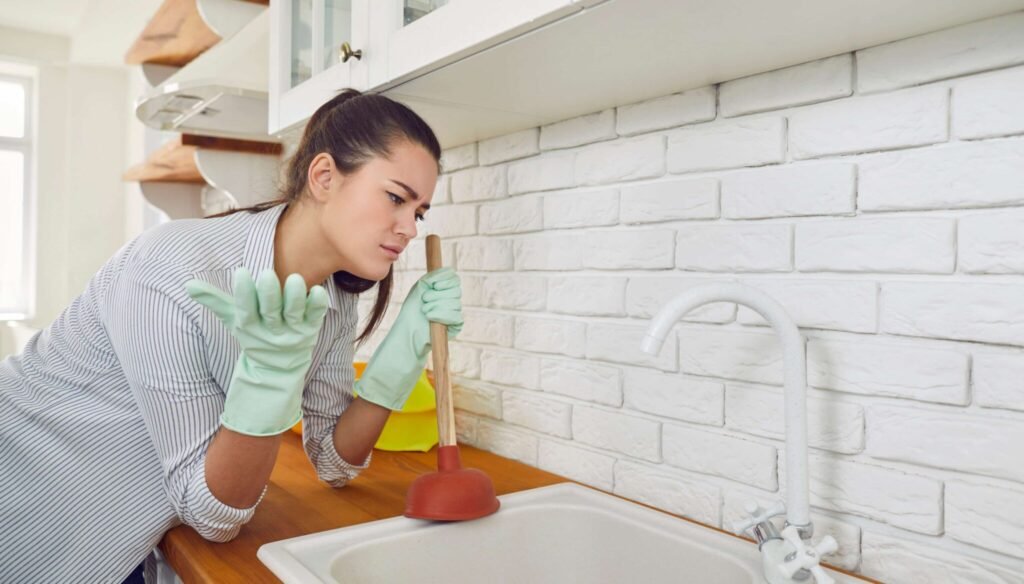
When a drain slows or backs up, the first question is whether the blockage is near a single fixture or deeper in the main sewer line. That distinction shapes what you can safely try on your own and what requires specialized tools. Telltale signs help you triage quickly: a hair mat in a shower P-trap behaves differently from a root intrusion in the sewer lateral. Paying attention to where water appears, which fixtures are affected, and whether you hear gurgling can prevent damage, messy overflows, and avoidable repairs. Here’s how to read the symptoms, attempt safe first steps, and know when the problem points to the main line.
Signals Pointing to a Local Fixture Clog
If only one fixture is affected, the blockage is usually close by. A bathroom sink that drains slowly while the tub and toilet work fine often has buildup in the P-trap or trap arm. A shower that pools water is often clogged with hair and soap scum near the drain. A kitchen sink that stalls after using the garbage disposal may be jammed with fibrous scraps in the branch line. In these scenarios, mechanical methods such as a cup plunger on a sink, a zipper-style hair remover, or a 1/4-inch hand auger are appropriate. For local context on service coverage as you plan next steps, see resources like drain cleaning service audubon, then continue with the checks below.
Red Flags of a Main Sewer Line Obstruction
Multiple fixtures slowing at once, especially on the lowest level, point toward a main line issue. Watch for the toilet bubbling when you drain a sink, a basement floor drain overflowing during a shower, or a laundry standpipe spilling when the washer pumps out. Those symptoms suggest wastewater has nowhere to go and is seeking the lowest opening. Other cues include sewer odors near a floor drain, a cleanout cap that is damp or seeping, or backups that coincide with heavy rain if groundwater infiltrates a cracked lateral. Common main-line culprits include tree roots at joints, grease and scale hardened along the pipe wall, or a sagging section (a “belly”) that traps solids.
Safe First Steps You Can Try Without Making It Worse
For a likely local clog, start with the right plunger. Use a cup plunger on sinks and tubs; use a flange plunger on toilets to seal the outlet. Seal overflows with a wet rag to improve pressure. If plunging fails, place a bucket under the sink, loosen the slip nuts, and remove the P-trap for a visual cleanout. A plastic zip strip can lift hair from showers, while a small hand auger can break a plug in a short branch line. Flush with hot water, but avoid boiling water on PVC. If a disposal is involved, cut power at the switch or breaker before checking for a lodged object and resetting the unit at the base button.
When signs point to the main line, stop all water use to limit the chance of a sewage backflow. Locate the main cleanout if you have one; it is typically a 3- or 4-inch capped fitting near the foundation, in a basement floor, or at a yard access. Clearing space around the cleanout helps a technician safely set up a cable machine or hydro jet. Document what you observed (which fixtures, gurgling sounds, timing with laundry or showers), and note any large trees above the lateral’s path. If a municipality maintains a public main and you suspect a public-side blockage, call them; for blockages in the private lateral between your house and the street, the next step is to use a licensed plumber’s equipment.
Common Mistakes That Turn Small Clogs Into Big Repairs
Pouring caustic drain openers before using a snake is a frequent misstep. Chemical heat can soften PVC, corrode old metal, and turn snaking into a burn hazard if the cable splashes back. Mixing products (for example, bleach with an acid opener) can generate toxic chlorine gas. Using the wrong plunger type wastes effort and may cause contaminated water to splash. Over-tightening slip-joint nuts after cleaning a trap can crack plastic fittings, while under-tightening leaves a leak that soaks cabinets. Forcing a long cable through a fixture opening, rather than from a cleanout, can push a clog deeper or scrape a fragile galvanized line. Using a wet/dry vacuum around water without a GFCI outlet adds shock risk to an already messy situation.
When Professional Tools Make the Difference
Some problems demand equipment most homes don’t stock. A sewer video camera can spot where a joint is offset, where roots enter, or where a belly holds sludge. Hydro jetting scours grease, scale, and soap from pipe walls rather than simply poking a hole, and specialized root-cutting heads trim intrusions more thoroughly than a basic cable. The trade-off is speed versus completeness: snaking may restore flow quickly, but residual buildup often remains; jetting takes more setup and access but provides a more thorough clean. In older homes, a house trap or corroded cast-iron sections can complicate access and require careful technique. If backups recur every few months, a camera inspection to identify the damaged section and a repair plan will generally outlast repeated quick clears.
Most clogs give off clues you can read with a little structure. Is it one fixture or many? Do backups appear at the lowest drains? Does the toilet bubble when another sink empties? Use the answers to try safe, mechanical steps on local blockages, and pause water use fast when main-line signs appear. Preventive habits help, too: catch hair in strainers, scrape plates before washing, collect and dispose of cooking grease, and flush only toilet paper. A periodic enzyme treatment can reduce biofilm in branch lines, while trimming thirsty roots near the lateral limits future intrusions. Keep the main cleanout accessible and jot down its location so you are ready if the line acts up again.
