


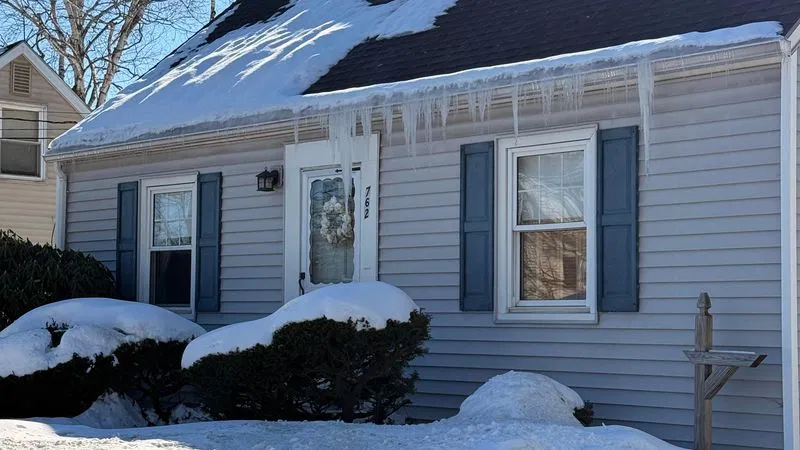
Few winter problems worry homeowners more than an ice dam crawling across the eaves. It starts with heavy snow on a cold roof, a sunny afternoon or rising indoor heat, and then a thick ledge of ice that traps meltwater behind it. That water can creep under shingles, soak roof sheathing, and stain ceilings and walls. If you have icicles growing like stalactites, damp insulation in the attic, or paint peeling near exterior walls, your roof may be signaling trouble. This article explains how to recognize early warning signs, what actually drives ice dam formation, the safe steps to take in winter, and the durable fixes to schedule when the weather warms.
-
Early warning signs at the eaves and inside the house
Watch for a fat, horizontal ridge of ice at the eaves, especially above overhangs and gutters, with meltwater pooling or weeping behind it. Inside, look for crescent-shaped water stains on ceilings near exterior walls, dampness at window heads, or blistering paint where plaster meets the ceiling. In the attic, frosted roofing nails, wet sheathing along the lower few feet of the roof, and compressed or discolored insulation are red flags. If you see these conditions, a qualified roofer such as Superior Roofing can inspect the eaves, flashing, and ventilation pathways before minor seepage becomes a larger repair.
After a nor’easter, one common scenario is a sunny, south-facing slope shedding meltwater that refreezes at a shaded eave. Gutters packed with snow become a cold heat sink. Water then backs up beneath the shingle tabs and reaches the underlayment. If soffit vents are buried in snow or blocked by insulation, the lower roof stays extra cold, strengthening the ice lip at the edge while the upper portion keeps melting. That contrast drives the cycle that creates interior staining a day or two later.
-
What actually causes ice dams: heat loss, airflow, and roof geometry
Ice dams are a physics problem first. Warm air leaking from the living space raises attic temperatures just enough to melt the underside of the snow blanket. Meltwater flows down to the unheated eaves and refreezes, building a dam. Typical culprits include low attic insulation levels, unsealed penetrations around recessed lights and plumbing chases, leaky attic hatches, and bath fans that dump humid air into the attic. Poor ventilation compounds the problem: missing soffit vents, clogged vent slots, or a ridge vent that lacks a clear pathway past the insulation baffles trap warm, moist air where it should freely escape.
Roof shape influences risk too. Low-slope additions, complex valleys, and long north-facing runs stay colder and collect drifting snow. Big overhangs create a wide band of cold roof at the eaves where ice likes to grow. Gutters do not cause ice dams, but they can thicken them by holding refreezing meltwater at the edge. Be wary of attic power fans as a quick fix; they can depressurize the attic and pull conditioned air from the house if you don’t address air sealing first. A continuous soffit-to-ridge ventilation path paired with tight air sealing generally outperforms fan-driven approaches.
-
Damage control you can do safely in winter
When you need to limit damage until a permanent fix, act gently and from the ground. Use a telescoping roof rake with wheels to remove the lower 3 to 4 feet of snow above the eaves, working carefully to avoid snagging shingle edges. Never chip ice with a shovel or hatchet, and never scatter rock salt on shingles; both can ruin roofing and corrode metal gutters. If water is leaking inside, collect it with buckets, and protect finishes with plastic sheeting. Indoors, directing a fan at the wet area of the ceiling can slow saturation while you arrange help. For severe dams, professional steam removal is the lowest-risk method to free the eaves without tearing granules off asphalt shingles.
Here is a realistic example: after a coastal storm, a single-story ranch develops a steady drip at the dining room crown molding. The homeowner rakes the lower roof area that afternoon and stops the leak. Later, they run a temporary deicing cable along the first course of shingles and inside the gutter to keep channels open during a coming cold snap. That said, heat cables are a tactical Band-Aid. They use energy, must be installed on a GFCI circuit, and need careful layout around downspouts and valleys to avoid overheating. Reserve them for tricky roof shapes while you address the root causes.
-
Permanent fixes in warmer weather: seal, insulate, and ventilate
Start by air-sealing the attic plane. Seal gaps at plumbing and wiring penetrations with foam or caulk, box over recessed lights using IC-rated covers, weatherstrip and insulate the attic hatch, and route bath fan ducts with insulated pipe to a proper exterior hood. Then bring insulation to an appropriate cold climate level and keep it dry. At the eaves, install baffles in each rafter bay so outside air from the soffit can travel above the insulation to the ridge. Ensure soffit vents are open, not painted shut or blocked by insulation, and that the ridge vent is continuous across the main peaks to balance intake and exhaust.
Plan roof detailing during your next reroof or a targeted eave retrofit. A self-adhered ice and water shield underlayment should extend from the eaves up past the warm side of the exterior wall line and be installed in valleys and other high-risk areas. Coordinate the drip edge and membrane so meltwater drains into the gutters, not behind the fascia. Check and update step flashing where roofs meet walls, and make sure dryer and bath vents don’t discharge into soffits where warm, moist air can loop back into the attic. These details do not stop ice from forming, but they keep incidental meltwater from reaching the living space.
When materials and roof shape influence your strategy
Roofing material changes how snow behaves. Standing seam metal tends to shed snow in sheets once the sun hits, reducing the time meltwater lingers at the eaves. Asphalt shingles hold snow longer and are more vulnerable to backup, so robust underlayment coverage at eaves and valleys is essential. On low-slope sections, a membrane roof with tapered insulation to promote drainage may be a smarter long-term upgrade than more shingles. Deep valleys, doghouse dormers, and intersecting rooflines trap drifting snow; wider ice barriers and improved airflow at those chokepoints pay off.
There are trade-offs to consider. On metal roofs, snow retention bars may be needed above entry doors and walkways to prevent sudden slides, but they also keep snow on the roof longer. Gutter guards reduce leaf maintenance yet can bridge snow across the eaves and become part of the ice mass if the attic is warm. Balancing safety, maintenance, and energy impact is easier once you understand that air sealing and ventilation are the foundation, and materials and accessories fine-tune performance for your specific roof geometry.
Ice dams are stressful, but solvable. In winter, focus on safe damage control: rake the lower roof, protect finishes, and arrange help for severe buildups. In spring and summer, address the causes by tightening the attic air barrier, improving insulation, and establishing a clear, balanced ventilation path from soffit to ridge. At your next roofing job, prioritize ice and water protection, coordinated drip edge and flashing, and thoughtful detailing in valleys and along walls. A short attic and eave assessment now can spare you stained ceilings and midwinter bucket brigades when the next freeze-thaw cycle arrives.
