


Today’s children read on tablets, do homework on laptops, and unwind with phones and gaming consoles. Screens are now part of learning and play, and that is not going to change. What parents can change are the daily habits around those screens. Small, consistent routines help protect children’s eyes during the years when their vision is still developing.
Quick answer: The most effective preventive eye care habits for children are following the 20-20-20 rule, blinking often during screen use, keeping screen time age-appropriate, spending time outdoors every day, setting up screens at a healthy distance, avoiding screens before bed, and keeping up with regular comprehensive eye exams. Together, these habits reduce digital eye strain and help catch vision problems early.
Why Children’s Eyes Need Extra Care in a Screen-Heavy World
A child’s visual system keeps developing throughout the school years, which is why routine comprehensive eye exams for children in Cary, NC matter as much as any screen-time rule. Long periods of close-up focus on devices can cause digital eye strain, with symptoms such as tired eyes, headaches, blurry vision, and dryness. Many children never mention these symptoms because they are absorbed in what they are doing, or simply assume everyone sees the same way.
Eye care professionals are also concerned about the steady rise in childhood nearsightedness (myopia). Extended near work and limited time outdoors are both linked to a higher risk. The good news is that a handful of simple daily habits can make a real difference.
8 Preventive Eye Care Habits Every Family Should Build
1. Follow the 20-20-20 Rule
The 20-20-20 rule is the easiest habit to teach: every 20 minutes of screen time or reading, look at something at least 20 feet away for 20 seconds. This short break relaxes the focusing muscles inside the eye. Parents can make it easier by setting a timer on the device or turning it into a game, such as spotting something out of the window.
2. Remind Children to Blink
People blink far less when staring at a screen, and research has found blink rates can fall by about half during computer use. Fewer blinks mean the eye’s surface dries out, leaving eyes gritty, red, or irritated. A simple reminder to blink fully during breaks, plus good hydration, helps keep eyes comfortable.
3. Keep Screen Time Age-Appropriate
The American Academy of Pediatrics advises avoiding screen media other than video chatting for children younger than 18 months, and limiting children aged 2 to 5 to about one hour a day of high-quality content, ideally watched with a parent. For older children, families should set consistent limits so that screens do not crowd out sleep, physical activity, homework, and family time. A written family media plan helps everyone know the rules.
4. Make Outdoor Time a Daily Habit
Outdoor time is one of the most valuable habits for young eyes. Natural daylight and looking at distant objects are both thought to help protect against the development of myopia. Many eye care professionals recommend around two hours outdoors each day, whether that is walking to school, playing in the park, or joining an outdoor sport.
5. Keep Up With Routine Comprehensive Eye Exams
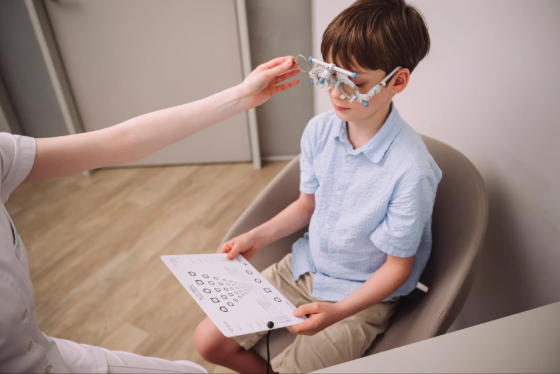
School vision screenings are helpful, but they are not designed to catch everything. A screening can miss focusing problems, eye-teaming issues, early myopia, and eye health conditions. The American Optometric Association recommends a first eye exam between 6 and 12 months of age, at least one exam between ages 3 and 5, and an exam before first grade, followed by an annual eye exam in Cary, NC throughout the school years. Yearly visits create a baseline, so changes can be spotted and treated early, often before a child notices anything is wrong.
6. Set Up Screens the Right Way
How a child uses a device matters as much as how long they use it. Parents can help by:
- Keeping tablets and books at a comfortable distance, roughly the length from the child’s elbow to their knuckles, rather than close to the face
- Positioning computer screens at or slightly below eye level
- Reducing glare by placing screens away from bright windows and using adequate room lighting
- Increasing text size so children do not lean in to read
7. Create a Screen-Free Wind-Down Before Bed
Screens in the evening can make it harder for children to fall asleep, and tired eyes are more prone to strain the next day. A screen-free hour before bedtime, and keeping devices out of the bedroom, supports both healthy sleep and eye comfort. Dark or night modes can help in the evening, but they do not replace a proper break.
8. Protect Eyes Beyond the Screen
Preventive eye care is not only about devices. Children should wear sunglasses that block 100% of UV rays when outdoors, and protective eyewear for sports such as basketball, baseball, and racquet sports. A balanced diet with leafy greens, colourful vegetables, fish, and eggs also supports overall eye health.
Do Children Need Blue Light Glasses?
Blue light glasses are heavily marketed to parents, but the American Academy of Ophthalmology does not recommend them, citing a lack of scientific evidence that blue light from screens damages the eyes. Digital eye strain is mainly caused by reduced blinking and prolonged close focus, not blue light itself. Breaks, blinking, and good screen setup are far more effective than special lenses.
Warning Signs Parents Should Not Ignore
Children rarely complain about their vision, so parents should watch for clues. A child may need an eye exam sooner than planned if they:
- Squint, rub their eyes, or blink excessively
- Hold devices or books very close to their face
- Complain of headaches or tired eyes after school or screen time
- Lose their place while reading or avoid close-up work
- Cover one eye or tilt their head to see
- Sit very close to the TV or struggle to see the board at school
Any of these signs is worth discussing with an eye doctor, even if a recent school screening was normal.
The Bottom Line
Screens are here to stay, but digital eye strain and preventable vision problems do not have to be. Simple daily habits, such as regular breaks, conscious blinking, sensible screen limits, outdoor play, and good device setup, go a long way toward protecting children’s eyes. Paired with yearly comprehensive eye exams, these routines help children see clearly in the classroom and beyond. Families in Cary and Raleigh, North Carolina, can turn to Eye Solutions for comprehensive eye exams for children aged 5 and up, including binocular vision assessment, digital retinal imaging, and guidance on screen time and school readiness.
