


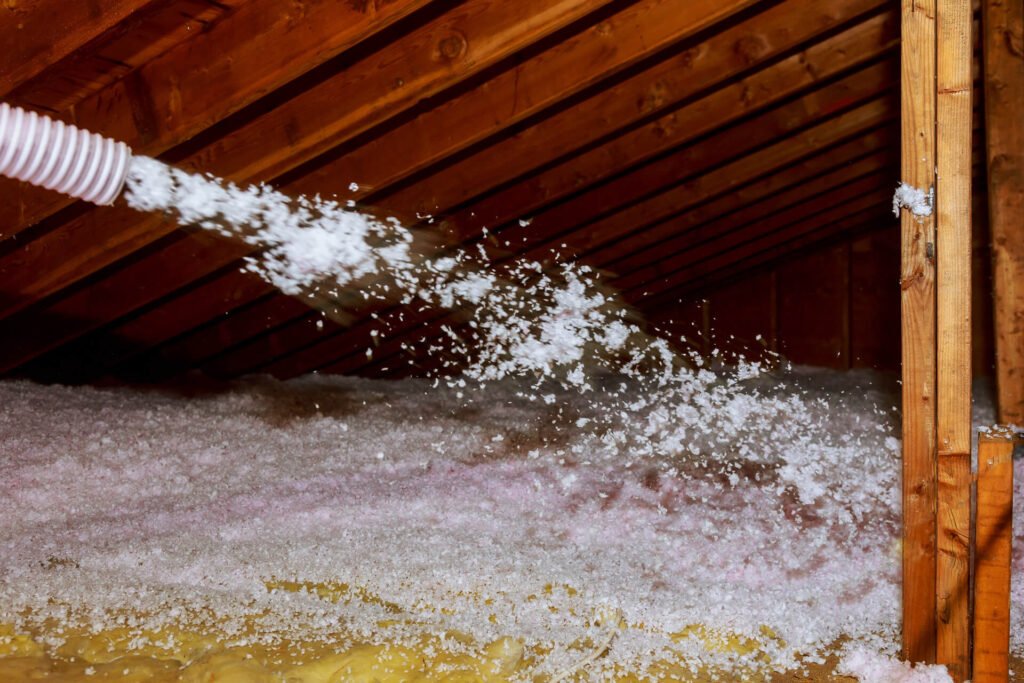
In a Gulf Coast summer, an uncorrected attic can act like a radiator pressed against your living space. Simply adding more fiberglass batts or blowing in a few extra inches of loose fill rarely fixes rooms that run hot, musty smells after rain, or energy bills that spike with each heat wave. Lasting results in Houston come from addressing air leakage, moisture pathways, and ventilation details before you top up R value. This article explains how heat and humidity behave in a Southeast Texas attic, what clues point to specific failures, where to inspect, and which corrections actually work in a hot, humid climate. Armed with that diagnosis, any added insulation will perform closer to its label.
-
What Houston’s Heat and Humidity Do Inside an Attic
On a clear August afternoon, the roof deck absorbs solar radiation. That heat radiates inward, raising attic air temperature and warming framing members through conduction. At the same time, warm, humid outdoor air can enter at soffit vents and roof penetrations. If that moisture-laden air meets cooler ductwork or a leaky, uninsulated attic hatch, condensation forms. The result is a space where radiant heat gain, air leakage, and vapor drive all work against comfort and efficiency.
Many homeowners start searching for attic insulation services in Houston when second-floor bedrooms feel 5 to 10 degrees warmer or when supply ducts sweat on muggy evenings. The temptation is to add insulation depth alone. Yet without air sealing the top plates, plumbing chases, and recessed light penetrations, that new material becomes a filter for indoor air escaping into the attic. Conditioned air carries moisture, which can feed mildew on roof sheathing and degrade the performance of even high-quality blown-in cellulose or fiberglass.
-
Early Clues Your Attic Envelope Is Failing
Specific symptoms often point to specific defects. For example, dusty streaks or “ghosting” lines across fiberglass batts usually indicate air movement through gaps at electrical boxes, drywall seams, or can lights. A musty odor after thunderstorms suggests warm, humid air is entering through poorly sealed soffits or gable vents and condensing on cooler surfaces like metal boots and flex duct. Uneven temperatures between floors, a draft around the attic pull-down, or sweating around ceiling registers are further clues that air leakage and insulation gaps, not just low R value, are at play.
Consider two common Houston scenarios. In one, a ranch home has knee walls behind side attics. The knee wall cavities are stuffed with batts but lack rigid foam backing; wind washing through soffit vents strips away their effective R value and cools the drywall, causing comfort complaints. In another, a two-story home has multiple non-IC-rated recessed lights. In summer, those fixtures act like chimneys; hot attic air infiltrates around them, and in winter, indoor air escapes upward, both undermining HVAC performance and inviting condensation at the roof deck.
-
Inspect These Details Before You Add a Single Inch
Start with air sealing targets you can see. Look for gaps around the attic hatch, top plates at interior walls, electrical penetrations, bath fan housings, and plumbing vents. Check whether can lights are IC-rated and airtight; if not, they need proper covers or upgrades before insulating. Inspect knee walls to confirm there is a continuous air barrier on the attic side, such as sealed rigid foam, not just exposed batts. Finally, examine ductwork for disconnected joints, crushed flex runs, and missing mastic at collars; duct leakage both heats the attic and drags humid air into living spaces.
Ventilation and protection details matter just as much. Confirm soffit vents are clear and that baffles, also called rafter vents, are installed to maintain an air channel from the soffit up to the roof deck. A common mistake is pushing batts into eaves, blocking soffits, which traps heat and moisture and can shorten the life of the roof sheathing. If your bathroom or dryer vents terminate into the attic rather than outdoors, correct that before adding any insulation. A quick DIY check with a smoke pencil or incense stick around penetrations can reveal air movement; pros use blower doors and thermal imaging to quantify it.
-
Fixes That Work in Hot Humid Attics
Seal first, then insulate. Use fire-rated foam or caulk at top plates, wire penetrations, and bath fan housings; add a gasket and insulation cover to the attic hatch. Over knee walls, install rigid foam board with taped seams to create a continuous air barrier before replacing or augmenting cavity insulation. Around the access opening and eaves, add insulation dams to keep loose fill material from spilling and to prevent baffles from being buried. When you do add insulation, aim for uniform coverage without compression; squashing fiberglass batts can cut their effective R value by increasing conduction through dense spots.
Material and assembly choices involve trade-offs. A vented attic with baffles, balanced soffit and ridge vents, and a full, even layer of blown-in cellulose or fiberglass can perform very well when air-sealed. Adding a radiant barrier under the roof deck can further reduce radiant heat gain, but it must face an air space and stay clean to be effective; heavy dust reduces reflectivity. An alternative is converting to an unvented, conditioned attic by spraying foam at the roof deck, which brings ducts into the thermal envelope and reduces wind-driven infiltration. That approach can boost comfort and protect ducts, but it changes how the roof assembly manages moisture and typically costs more up front. Vapor retarder placement depends on climate; in Houston, avoid creating double vapor barriers that trap moisture. When in doubt, follow code guidance and product instructions for hot humid zones.
After the Upgrade: Verifying Performance and Keeping It That Way
After the upgrade, verify results rather than assume them. Check that the temperature difference between floors has narrowed, that supply registers no longer sweat, and that the attic hatch seals tightly without drafts. Use a simple indoor hygrometer to keep humidity in a comfortable range, and watch for recurrence of musty odors after storms. Seasonally, make sure soffit vents remain unobstructed, baffles still stand after any service work, and loose-fill insulation stays level across joists. If electricians or cable installers disturb air sealing, reinspect top plates and penetrations. Over time, these habits keep your new R value working as intended and protect both comfort and building materials.
Houston’s climate punishes any weak point in the attic. When you correct air leaks, preserve ventilation pathways, and add well-installed insulation, you cut heat gain at the source instead of burying problems under more inches. Whether you choose a well-sealed, ventilated attic with uniform loose fill or a sealed roof deck with spray foam, the right sequence and details will do more for comfort and energy use than any single product. A methodical diagnosis up front turns an insulation upgrade into a durable improvement rather than a short-lived patch.
