


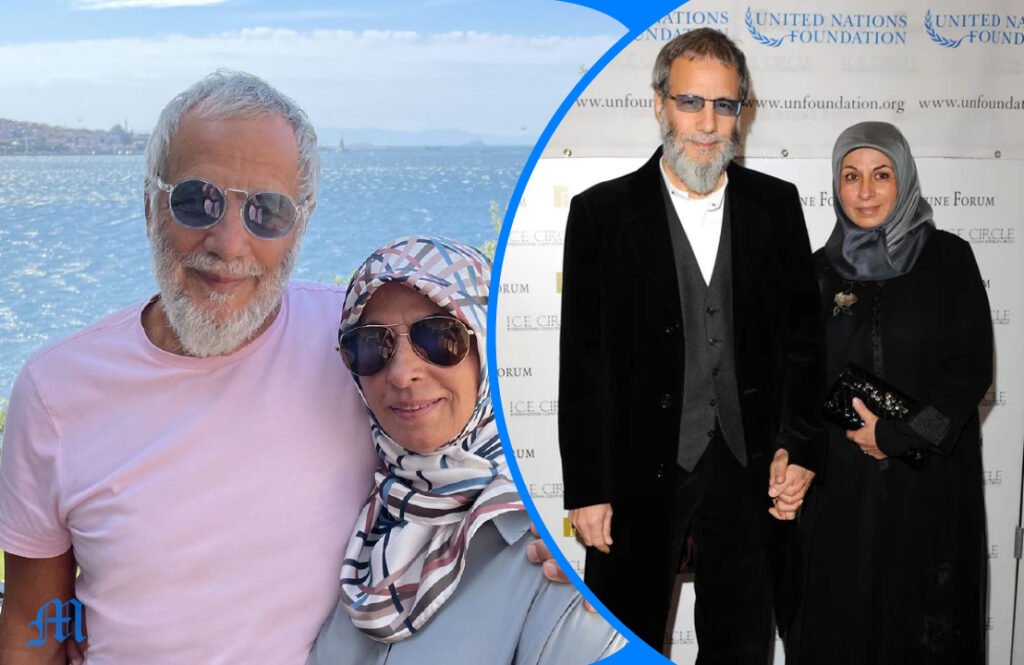
Imagine a global rock star at the top of his fame. Then, one day, he gives it all up — the guitars, the tours, the spotlight — to follow his faith. That’s exactly what Cat Stevens did. And by his side through it all was a quiet woman named Fauzia Mubarak Ali.
Here’s a sweet twist. When Fauzia first met him, she didn’t even know his music. She was actually a big Elvis Presley fan. She wasn’t drawn to his fame — she was drawn to the man himself.
Fauzia Mubarak Ali has stayed private for over forty years. Because of that, some parts of her story are clear, while others are honestly a bit of a mystery.
In this article, we’ll walk through her marriage, her family, and her famous husband — while being honest about what’s truly known and what isn’t. Let’s begin.
Who Is Fauzia Mubarak Ali?
Fauzia Mubarak Ali is best known as the longtime wife of Cat Stevens, the British music legend who later became Yusuf Islam. That connection is the main reason people search for her today.
You might see her name spelled a few different ways. It appears as Fawzia, Fouzia, or Fawziah in various places. They all point to the same person — Yusuf Islam’s devoted wife.
Beyond her marriage, Fauzia keeps a very private, low-key life. She rarely speaks to the media and avoids the public eye. Most of what people know about her comes through her husband, not from her.
What stands out most is her steady support. Through every twist in Yusuf’s life — leaving music, embracing faith, and later returning to the stage — Fauzia has quietly stood by his side.
Fauzia Mubarak Ali’s Background: What We Know
Now for the honest part. When it comes to Fauzia’s early life and background, the truth is that sources strongly disagree. So instead of guessing, let’s look at both stories openly.
One account describes her as the daughter of an accountant from Surbiton, a suburb in England. This version paints her as British-raised, which fits nicely with the Elvis-fan detail and her life within London’s Muslim community.
Another version, repeated on many websites, says she was born on March 24, 1958, in Karachi, Pakistan. This account adds that she studied literature and later became a human rights activist. It’s a detailed story — but it isn’t well confirmed.
Here’s the issue. These same sources often contradict each other, even on basic points like her ethnicity, calling her Pakistani in one line and Arab in another. That kind of mix-up is a warning sign that the details may not be reliable.
So what’s the fair conclusion? We honestly can’t say for sure where Fauzia grew up. She has kept her past private, and much of the “detailed” biography online may simply be unverified. It’s better to be honest than to state something as fact when it isn’t.
How Fauzia Met Cat Stevens
So how did a private woman end up marrying a world-famous musician? Their love story is refreshingly simple. It began not with romance and fame, but with faith and family.
Most accounts say their marriage was arranged. This is a common and respected practice in the Islamic faith. It’s believed that Yusuf’s late mother, Ingrid Wickman, helped choose Fauzia as a good match for her son.
As the story goes, Yusuf showed his mother a few women he knew and asked her opinion. In the end, he made the final choice himself. And the woman he chose was Fauzia.
What makes it special is why she said yes. Fauzia Mubarak Ali wasn’t dazzled by his stardom — remember, she barely knew his music. She was drawn to his character, his calm nature, and his strong beliefs. Their bond was built on shared values, not fame.
Fauzia Mubarak Ali and Cat Stevens’ Marriage
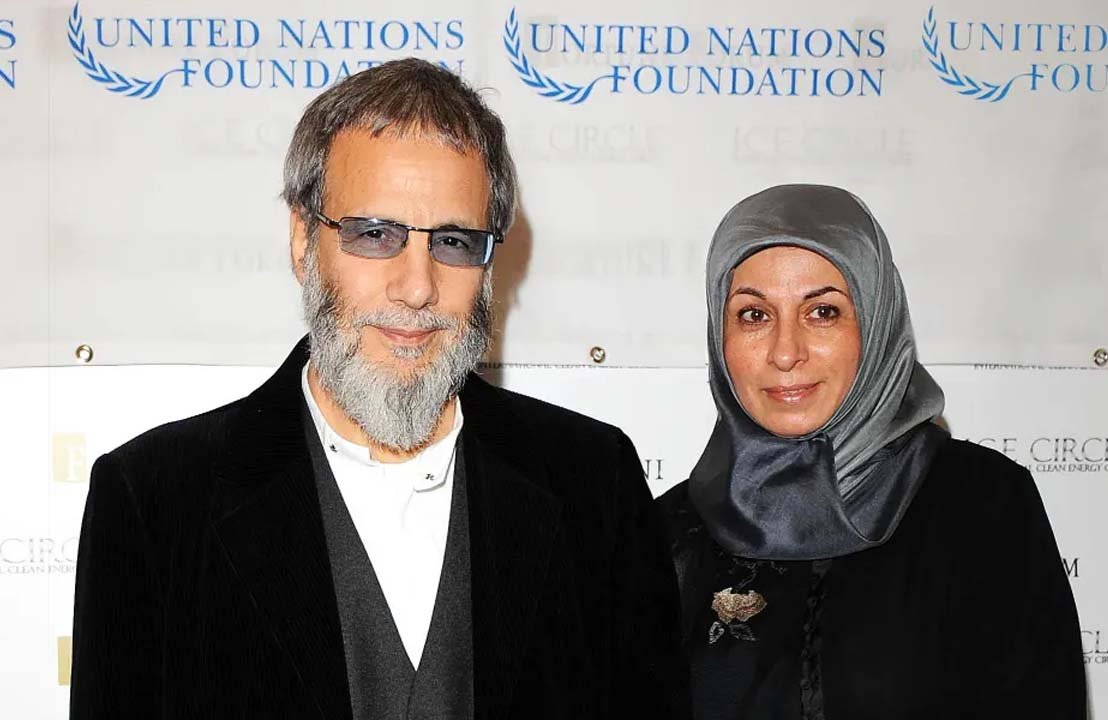
So let’s talk about the big day. Fauzia married Yusuf Islam on September 7, 1979. The wedding took place at Regent’s Park Mosque in London, also known as the London Central Mosque.
The ceremony was simple and peaceful. It followed Islamic traditions and focused on faith and family. There were no flashy events or big headlines — just a quiet, meaningful start to their life together.
Their marriage has lasted for over four decades, which is no small feat. Staying married that long is hard for anyone, and even harder when one partner is a global star. Yet Fauzia Mubarak Ali and Yusuf made it work through trust and respect.
Yusuf has often shared his love publicly. He posted warm tributes for their 41st and 45th anniversaries. In one, he turned his thoughts to families torn apart by conflict, praying they’d be reunited in peace.
There’s also one especially sweet detail. Yusuf changed a line in his song “Hard Headed Woman” just for Fauzia. Instead of singing that he was “looking for” his hard-headed woman, he now sings that he’s “found” her. How lovely is that?
Fauzia Mubarak Ali’s Children
Fauzia and Yusuf built a big, close family together. Here I’ll be honest again: sources don’t fully agree on the numbers. Most say they have five surviving children, with one son sadly lost in infancy.
The children are generally named as Hassana, Asmaa (Eve Georgiou), Maymanah, Amina, and Muhammad. Each has grown up and built their own life, mostly away from the spotlight, just like their private mother.
By many accounts, their paths are impressive. Hassana reportedly works as a company director and lives in the United Arab Emirates. Asmaa is said to be a solicitor in London, while Maymanah and Amina are described as photographers.
The family has also grown with grandchildren. Yusuf has happily shared news of new arrivals over the years, once celebrating a grandson born on his own birthday. For Fauzia, family clearly sits at the very heart of her quiet life.
The Son Who Brought Music Back
Here’s one of the warmest stories in Fauzia Mubarak Ali’s family — the tale of how music returned to their home. And it all started with one of her sons.
For years, Yusuf had stepped away from music after embracing his faith. He wasn’t sure how music fit with his beliefs. Then their son Muhammad, also known as Yoriyos, did something simple but powerful.
Muhammad came home one day with a guitar and began writing songs. He had no hesitation about it at all. That small, bold act helped his father see music in a new, comfortable light.
Yusuf later said his son helped him understand where music sits in Islamic culture, and that he found himself free to sing again. Muhammad broke the taboo for him. Fittingly, Muhammad grew up to become a musician too, following in his famous father’s footsteps.
Fauzia and Yusuf’s Charity Work
Fauzia Mubarak Ali’s life isn’t only about family — it’s also about giving back. Together with Yusuf, she helped create real, lasting good in the world through charity.
The couple co-founded a charity called Small Kindness. Its mission is heartfelt and simple: to help orphans, widows, and struggling families. The name itself reflects the belief that small acts of kindness can matter greatly.
The charity stepped up during the Balkans conflicts, offering support to families caught in hardship and war. It was a way to turn faith and compassion into action for people who truly needed help.
Now, a quick honest note. Some sources also credit Fauzia Mubarak Ali with founding a separate human rights group and leading big campaigns. Those specific claims aren’t well confirmed, so it’s fair to focus on the charity work that’s clearly documented.
Who Is Cat Stevens (Yusuf Islam)?
To fully understand Fauzia’s world, it helps to know the man she married. Cat Stevens is one of the most beloved singer-songwriters in British music history.
He was born Steven Demetre Georgiou on July 21, 1948. Under the name Cat Stevens, he created timeless hits like “Moon Shadow,” “Morning Has Broken,” and “Peace Train.” His gentle, thoughtful songs touched millions.
His success is staggering. He has sold over 100 million records and earned billions of streams. In 2014, he was inducted into the Rock and Roll Hall of Fame, and he’s received honorary doctorates for his humanitarian work.
Even today, he stays active and creative. In 2023, he released a new album, King of a Land, and performed at the famous Glastonbury Festival for the first time. Through it all, Fauzia has remained his steady support.
Why Cat Stevens Changed His Name
One of the most fascinating parts of this story is how Cat Stevens became Yusuf Islam. It’s a dramatic tale of a life-changing moment by the sea.
In 1976, at the peak of his fame, he was swimming off the coast of Malibu, California. Suddenly, he found himself in danger of drowning. In that terrifying moment, he cried out, “Oh, God! If you save me, I will work for you.”
Almost miraculously, the waves carried him safely back to shore. This brush with death sparked a deep spiritual awakening in him. Soon after, his brother gave him a copy of the Qur’an as a birthday gift.
That book changed everything. He explored the Muslim faith deeply and formally converted to Islam in 1977. The following year, he took the name Yusuf Islam. Not long after, he married Fauzia Mubarak Ali and began a whole new chapter of life.
Fauzia Mubarak Ali’s Private Life Today
So what does life look like for Fauzia Mubarak Ali now, in 2026? In a word: peaceful. She continues to live the quiet, private life she has always preferred.
After more than four decades of marriage, she and Yusuf remain a strong, steady team. They’ve raised their children, welcomed grandchildren, and built a life rooted in faith, family, and shared values.
True to form, Fauzia Mubarak Alistill still stays out of the spotlight. She rarely appears in public and doesn’t seek media attention. When we do see her, it’s usually beside her husband at a special event.
And that’s really the essence of who she is. Fauzia Mubarak Ali chose devotion over fame and privacy over publicity. Her quiet strength has been a lasting force behind one of music’s most remarkable life stories.
Interesting Facts About Fauzia Mubarak Ali
Fauzia may live a quiet life, but her story has some sweet and surprising details. Here are a few that stand out:
- She was an Elvis fan, not a Cat Stevens fan. When they met, she barely knew her future husband’s music.
- Her husband rewrote a song for her. He changed “Hard Headed Woman” from “looking for” to “found,” just for Fauzia Mubarak Ali.
- Their marriage was arranged — and reportedly, Yusuf’s own mother helped choose her.
- They married in a mosque, not a chapel. The 1979 ceremony was simple, private, and faith-focused.
- One of her sons brought music back into their home by buying a guitar, freeing his father to sing again.
- She helped build a charity. Together with Yusuf, she co-founded Small Kindness to help orphans and widows.
- Her origins are a real mystery. Even careful sources can’t agree on where she was born or raised.
Bottom Line
Fauzia Mubarak Ali’s story is a quiet one — and that’s exactly how she likes it. She’s the steady, private partner behind a global star who traded fame for faith.
What we know for sure is heartwarming. She married Yusuf in 1979, raised a close family, helped build a charity, and supported her husband through every major turn in his remarkable life.
We’ve also been honest about what isn’t clear. Her early background, her exact origins, and a few other details remain uncertain, with sources openly disagreeing. It’s fairer to admit that than to guess.
In the end, Fauzia Mubarak Ali reminds us of something simple and true. Behind many great lives stands a quiet, loving partner. And her steady devotion has been a beautiful part of Cat Stevens’ journey.
(FAQs)
Who is Fauzia Mubarak Ali?
She’s the longtime wife of British music legend Cat Stevens, now known as Yusuf Islam. She lives a very private life away from the spotlight.
When did she marry Cat Stevens?
Fauzia married Yusuf on September 7, 1979, in a simple ceremony at Regent’s Park Mosque in London. They’ve been married for over four decades.
How many children do they have?
Most sources say five surviving children. Reports suggest one son was sadly lost in infancy. Their children have mostly led private lives.
Where is Fauzia Mubarak Ali from?
This is genuinely unclear. Some sources say she was raised in England, while others say she was born in Karachi, Pakistan. The details aren’t confirmed.
What charity did they start?
Fauzia and Yusuf co-founded Small Kindness, a charity that helps orphans, widows, and families, including those affected by the Balkans conflicts.
