


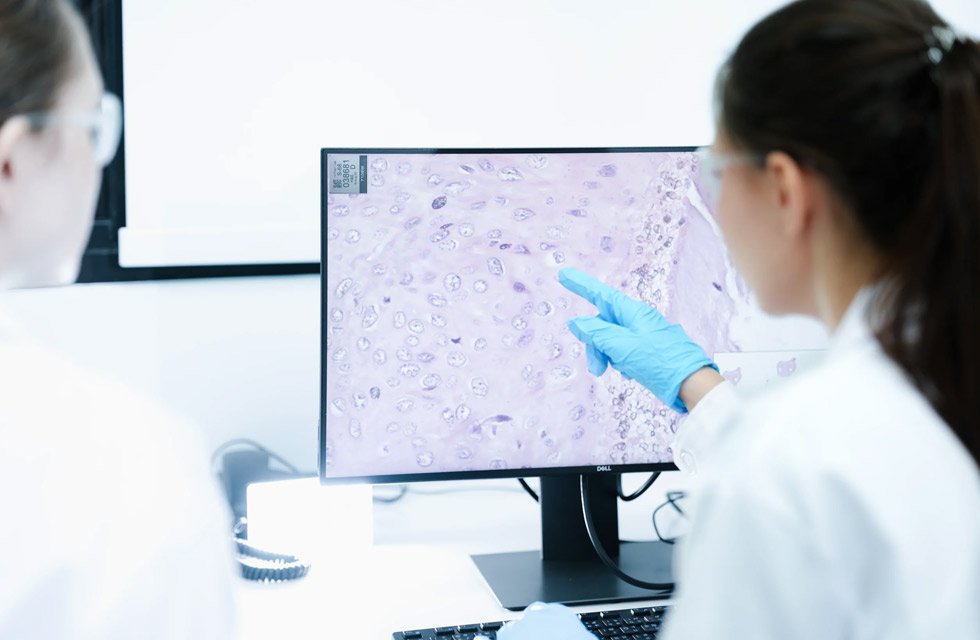
For years, digital pathology lived in the “someday” column for most labs. Pathologists liked the idea of reading slides on a screen, sharing cases across sites, and leaving the microscope behind. Lab directors liked the idea too, right up until they priced out scanners, storage, and the staff time needed to make it all work.
That picture has changed quickly over the past several months. The conversation has moved away from whether digital pathology works and toward a harder, more practical question: how do labs make it work every day without slowing everyone down?
Adoption Is Growing, but Most Labs Are Still in the Middle
Digital pathology remains early in its adoption curve. Roughly one in ten U.S. laboratories has adopted it, which means the vast majority of labs either haven’t started or are running some kind of hybrid setup with glass and digital side by side.
Still, the momentum is real. Large academic centers have spent this year validating digital workflows for primary diagnosis, remote frozen section sign-out, and tumor boards. Scanner manufacturers keep expanding their product lines and geographic reach. Image management vendors have pushed further into cloud-based platforms built to help health systems scale. And pathology informatics leaders now openly predict that digital pathology will move from early adoption to standard practice within the next five years.
So the trend line points one direction. The open question is what happens to the labs caught in between.
Going Digital Has Added Work Instead of Removing It
Here’s the part that rarely shows up in vendor brochures. Many labs that went digital found themselves slower, not faster.
The reimbursement landscape tells the story. Digital pathology now carries more than 40 Category III add-on codes, which formally acknowledges that digitizing slides adds work to the lab. Someone has to decide which cases to scan, confirm the slide set is complete, chase down failed scans, and make sure the right images attach to the right patient.
The scanner usually isn’t the problem. The problem is architecture. In most labs, the case lives in the laboratory information system (LIS) while the slide images live in a separate image management system. An interface sits between the two and tries to match identifiers across two databases. When it works, nobody notices. When it doesn’t, the consequences range from annoying to dangerous.
Pathologists feel every one of these gaps. They tend to deal with:
- Toggling between two windows and two worklists for the same case
- Retyping case numbers to confirm they’re looking at the right slide
- Opening a case only to discover a recut or stain never got scanned
- Answering billing questions after sign-out because digital codes didn’t carry over
None of these issues sound dramatic on their own. Stack them across hundreds of cases a week, though, and the promised efficiency of digital pathology disappears.
The Industry Is Moving Toward Integration
The biggest shift this year isn’t a new scanner or a new algorithm. It’s the growing recognition that digital pathology needs to connect to everything else the lab does.
You can see this across the market. AI developers now partner with reporting and workflow vendors so their tools show up inside the pathologist’s existing process rather than in yet another application. Image management companies talk constantly about interoperability. Labs evaluating digital platforms ask tougher questions about how images, orders, reports, and billing will actually flow together.
AI adds another layer of urgency. Algorithms that flag tumor regions or grade cancers only help if they fit into the pathologist’s day without extra clicks. A brilliant AI tool trapped in a disconnected viewer won’t move the needle on turnaround time.
All of this points to the same conclusion. Labs don’t need more tools. They need fewer handoffs.
How NovoPath Is Leading the Shift
NovoPath has taken a direct approach to this problem. At the end of September 2026, the company introduced the next generation of its LIS with the digital pathology workflow built in, rather than bolted on through a separate system.
The idea is simple. Instead of matching a case in one database to images in another, NovoPath keeps the case and its slides in one record. The slide barcode, the scanner file, and the LIS case line up without anyone retyping information, so every image stays tied to the correct patient.
That single change ripples out across the lab in a few important ways.
Patient Safety Comes First
When images and case data live in one system, there’s no interface to break between them. NovoPath’s specimen tracking and discrepancy tools also help catch mismatches at the bench instead of at sign-out, when they’re far harder to fix.
Cases Arrive Complete
Because NovoPath owns the case, it knows every slide the case should include, from recuts and levels to special stains. Pathologists can see what’s still pending before they open a case. Failed or blurry scans turn into trackable tasks with an assigned owner, and a pathologist can request a rescan or recut directly from the viewer.
One Workspace for Reading and Reporting
Pathologists can write reports, order stains, and capture image snippets while the slide stays open. Digital and glass cases share one worklist and follow the same rules. Auto case distribution routes work by subspecialty, client, location, and workload, and remote sign-out across sites follows CAP requirements for validation and identity.
Billing Captures Itself
NovoPath captures digitization add-on codes on the case and pairs them with the primary service code. Hybrid cases get coded slide by slide, and stains or recuts ordered from the viewer become charges automatically. That takes routine billing work off the pathologist’s plate and helps the lab build accurate utilization data as these codes mature.
Labs Can Go Digital Without Starting Over
One of the biggest barriers to digital pathology has always been the fear of a massive, all-at-once conversion. NovoPath removes much of that pressure.
Going digital with NovoPath doesn’t require new hardware. Labs keep the scanners they already own, including models from Leica, Hamamatsu, Philips, Motic, and KFBIO. They can use their existing viewer or NovoPath’s built-in viewer, and they can store images in the cloud or on-premises.
Even better, labs can move at their own pace. Cases already read stay on the existing image system, while new cases run in NovoPath. That means a lab can go digital one site, one specialty, or even one pathologist at a time. For most labs sitting in that hybrid middle ground, this kind of gradual path makes far more sense than a risky full cutover.
NovoPath also brings experience to the table. More than 300 laboratories use the platform across anatomic, molecular, clinical, cytology, and veterinary pathology, and the company was the first enterprise LIS to move to the cloud. Building digital pathology into the LIS follows that same pattern of meeting pathologists where they’re headed. You can explore how the workflow comes together on NovoPath’s digital pathology solutions page.
What Comes Next for Digital Pathology
The next few years will likely separate labs that simply digitized their slides from labs that truly digitized their workflow. Scanners will keep improving and AI will keep advancing, but the labs that benefit most will be the ones that eliminate the friction between systems.
For pathologists, that means less time chasing slides and more time making diagnoses. For lab managers, it means fewer manual checks and cleaner audit trails. And for the business side, it means billing that reflects the actual work being done.
Digital pathology has finally reached the point where the technology isn’t the hard part. The workflow is. NovoPath’s decision to give the case one home inside the LIS shows exactly where the industry needs to go next.
