


Concrete gets taken for granted. It’s everywhere—garage floors, driveways, patios, commercial slabs—and most people don’t think about it until something goes wrong. Cracks appear. Stains set in. Surfaces start looking worn and tired. By then, the damage is already done, and the cost to fix it is far greater than it would have been to protect it in the first place.
That’s the story carbon concrete coatings are changing. These high-performance surface solutions are gaining serious traction among homeowners, contractors, and commercial property managers who want surfaces that stay protected, look sharp, and hold up under pressure. This isn’t a niche product for specialists—it’s a smarter approach to one of the most overlooked aspects of property maintenance.
What Makes Carbon Concrete Coatings Different From Standard Options?
Traditional concrete sealers do a basic job. They repel moisture for a season or two, then fade, peel, and need reapplication. Carbon-enhanced coatings operate on a different level entirely.
The carbon component—typically carbon fiber reinforcement integrated into the coating matrix—adds structural resilience that standard epoxy or acrylic sealers simply can’t match. The result is a surface that resists cracking under thermal expansion, sheds chemicals and oil without absorbing them, and maintains its appearance far longer than conventional alternatives.
For high-traffic areas—think garage floors, warehouse slabs, commercial driveways, or poolside surfaces—that durability isn’t a luxury. It’s what separates a floor that looks good for a decade from one that needs costly repairs within two or three years.
The Real Cost Conversation: Upfront Investment vs. Long-Term Savings
One of the most common hesitations around premium concrete coatings is price. A carbon concrete coating costs more than a basic seal coat—that’s true. But framing the decision around upfront cost alone misses the bigger picture.
Uncoated or poorly coated concrete absorbs water. Water expands and contracts with temperature changes. That movement causes cracking. Cracking leads to spalling. Spalling leads to full slab replacement—a project that can run into thousands of dollars, depending on the area.
A properly applied carbon concrete coating interrupts that cycle at the earliest stage. It seals the surface against moisture infiltration, reduces the impact of freeze-thaw cycles, and creates a barrier against oil, salts, and chemical spills that would otherwise degrade the concrete from within.
The math tends to favor coating. Decisively.
Where Carbon Concrete Coatings Perform Best
These coatings aren’t one-size-fits-all, but they’re remarkably versatile. Here’s where they consistently deliver outstanding results:
Residential Garages: Oil drips, tire marks, and road salt tracked in from vehicles are the enemy of bare concrete. A carbon coating creates a surface that wipes clean and resists staining without requiring ongoing maintenance.
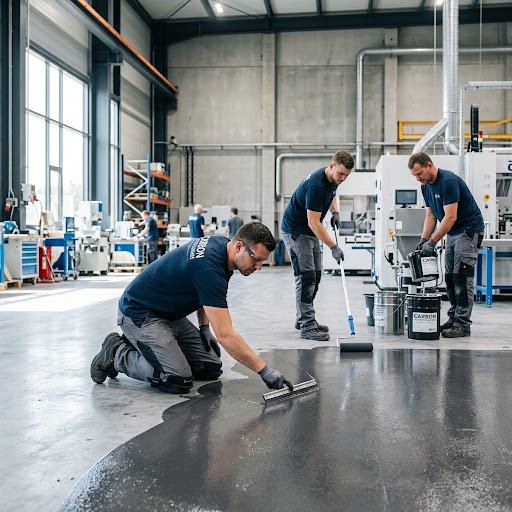
Commercial and Industrial Floors: Warehouses, workshops, and retail floors endure constant foot traffic, forklift movement, and heavy loads. Carbon-enhanced coatings handle the mechanical stress while keeping floors looking professional and clean.
Driveways: Exposure to sun, rain, frost, and vehicle weight puts driveways through a punishing cycle. Carbon coatings provide UV resistance alongside their structural benefits, preventing the fading and surface erosion that age most driveways prematurely.
Outdoor Entertaining Areas: Patios and poolside areas face moisture, UV exposure, and temperature swings daily. A carbon concrete coating keeps these spaces looking finished and well-maintained, without demanding constant upkeep.
What the Application Process Actually Looks Like
A quality carbon concrete coating job isn’t a DIY afternoon project—and that’s a good thing. The preparation phase alone determines whether the coating bonds correctly and lasts as intended.
Professional applicators begin with surface grinding or shot blasting to open the concrete’s pores and remove contaminants. Any existing cracks are repaired and filled. The concrete must reach the right moisture content before coating begins. Then the carbon-enhanced primer and topcoat layers are applied in controlled conditions to ensure adhesion and cure correctly.
Done right, the finished surface is seamless, extremely hard-wearing, and visually impressive. Done wrong—rushed prep, inferior products, uncontrolled application conditions—and even the best coating materials won’t perform as they should.
This is why choosing an experienced service provider matters as much as choosing the right product.
How Carbon Concrete Coatings Enhance Property Value and Appeal
There’s a visual dimension to this conversation that deserves attention. Coated concrete doesn’t just protect—it transforms.
A freshly coated garage floor, for example, changes the entire feel of the space. It reads as intentional, finished, and cared-for. The same applies to driveways and commercial floors. First impressions carry weight, whether you’re welcoming guests, listing a property for sale, or presenting a business to customers.
Carbon Concrete Coatings delivers professional-grade surface protection that strengthens your property’s structural integrity, elevates its visual appeal, and significantly reduces the long-term maintenance burden that uncoated or poorly protected concrete creates over time.
Property buyers notice these details. Commercial tenants notice them too. An investment in quality coating pays returns that extend well beyond the floor itself.
Is a Carbon Concrete Coating Right for Your Surface?
The answer depends on a few honest questions. How old is the concrete? Surfaces with significant structural damage need repair before coating—no surface treatment can substitute for proper remediation of deep cracks or compromised slabs.
What’s the surface’s exposure? High-traffic, high-moisture, or high-chemical environments benefit most dramatically from carbon-enhanced protection. Lower-exposure surfaces will still benefit, but the case for premium coatings is strongest where conditions are demanding.
What’s your timeline for the property? If you’re planning to sell within 12 months or undertake a renovation that might affect the surface, timing matters. But for properties you’re holding long-term, the earlier the coating goes down, the more protective value it delivers.
For most residential and commercial concrete surfaces in active use, a carbon concrete coating isn’t just a reasonable choice—it’s the defensible one.
The Difference a Professional Service Makes
Concrete coating is a field where quality of application drives outcomes more than almost any other variable. Two properties could receive the same product and end up with dramatically different results based purely on how the job was prepared and executed.
Reputable carbon concrete coating services bring trained applicators, professional equipment, and tested processes to every job. They assess the surface before recommending a system, not after. They stand behind their work with warranties that reflect genuine confidence in the outcome.
That level of professionalism protects your investment in a way that a product alone never can.
Your Concrete Deserves Better Than the Status Quo
Leaving concrete unprotected is a slow-moving problem. It rarely announces itself dramatically—it just quietly deteriorates, year after year, until the repair bill becomes unavoidable.
Carbon concrete coatings offer a clear, proven alternative. Stronger surfaces. Less maintenance. Better appearance. Higher property value. The case isn’t complicated—it’s just a matter of acting before the damage does.
If your concrete floors, driveway, or commercial surfaces haven’t been assessed for coating, now is the right time to have that conversation with a qualified professional.
